
Best Construction Estimating Software: Overview and Features
Discover the best construction estimating software with a comparison of the main features useful for making cost management more effective
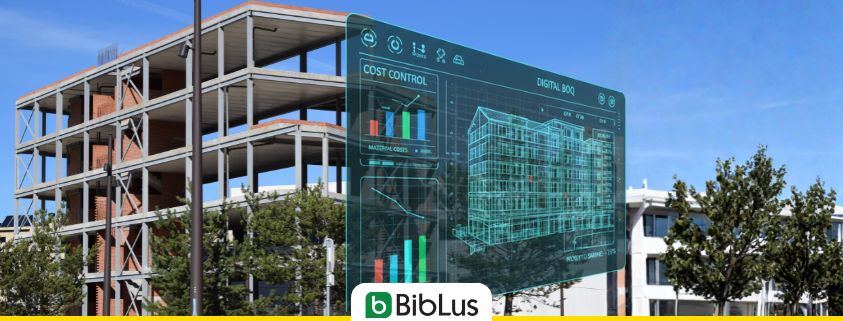
Choosing the right construction estimating software depends on several factors, including the type of project, required level of detail, BIM integration, and the specific operational needs of designers, contractors, or project managers. There is no one-size-fits-all solution: some tools are better suited for complex cost estimations, while others excel in supporting collaborative workflows or integrating economic analysis directly into the design phase.
Accurate construction cost estimation is crucial at every stage of a building project. It helps forecast the resources required, compare design alternatives, and track the economic evolution of the contract. As construction sites become more complex and the need for coordination among various stakeholders grows, a structured digital approach has become essential. This approach integrates measurements, calculations, price analyses, and the management of technical documents seamlessly.
To ensure continuity and consistency throughout the project lifecycle, it is essential to use reliable and interoperable tools that can communicate with BIM models, updated price lists, and management platforms. In this context, established solutions like PriMus represent a benchmark for those who want to manage metric calculations, estimates, and work accounting with precision and transparency.
In this comprehensive analysis, we explore the leading software available on the market, offering a comparative overview to help identify the best solution for varying operational requirements.
Contents
Why is construction estimating software crucial in today’s project?
The economic management of a building project today requires a level of precision, traceability, and coordination that can no longer be guaranteed with traditional tools or manual spreadsheets. The increasing complexity of work, the presence of updated price lists to comply with, the need to compare design alternatives, and the coordination between designers, companies, and project management make the use of dedicated cost estimating software essential.
A modern software indeed allows for centralizing measurements, calculations, price analyses, updates, and connections with other operational phases, reducing errors, time, and duplications. This digital approach offers continuity between estimating, contract management, and economic control, transforming cost estimation into a strategic tool for the entire lifecycle of the work.
In the following paragraphs, we analyze in detail the functions that make these tools indispensable: from the fundamental components of the estimating process, to the connection between estimates and project budgets, to the integration with work accounting, site management, and BIM 5D flows.
Digital takeoff, metric calculation, price analysis, price lists
At the core of any estimating software are four fundamental components:
- digital takeoff: measuring quantities directly from 2D drawings (DWG, PDF, etc.) or from 3D/BIM models. The software allows for calculating areas, volumes, lengths with guided measurement tools, reducing typical errors of manual measurements;
- cost estimation: this is the document that collects all the work with related quantities, units of measure, and unit prices. The software manages items, categories, summaries, and variants in a structured and updatable manner;
- price analysis: allows for breaking down the price of each item into materials, labor, rentals, and overhead, thus building a price list consistent with one’s way of working;
- price lists: many software solutions allow importing public price lists or company price lists and updating them periodically, ensuring estimates are always aligned with the market or local regulations.
From estimating to project budget: linking estimation and execution
The estimate is not a “standalone” document: it is the first step of an economic cycle that continues with contract management. A good estimating software allows you to reuse the data from the calculation to build the project budget, breaking down costs by phases, work categories, suppliers, and cost centers.
In this way, the initial estimate becomes the basis for monitoring deviations between planned and actual costs, managing variations, updating margin forecasts, and supporting quick decisions on site (for example, changing materials or construction solutions).
The connection between estimation and budget is therefore essential to transform the work of designers and technicians into a real economic control tool for companies, firms, and contracting authorities.
Integration with accounting, site management, and BIM 5D
In more advanced contexts, cost estimation does not exist in isolation but is integrated with:
- work accounting: progress, interim payments, payment certificates, and reserves can be directly linked to the calculation items, avoiding double entries and inconsistencies;
- site management: planning of work, management of purchases, suppliers, and inventory can draw on the economic information from the estimate to schedule times and resources;
- BIM 5D: in BIM workflows, the “5D” dimension links each object in the model (walls, floors, systems…) to the corresponding cost items, allowing for automatic updates of estimates when the project changes, simulating design alternatives, and assessing the economic impact of each choice.
Software solutions for construction cost estimation: overview of the main tools
Before analyzing in detail the main tools available for construction cost estimation, it is useful to have an overview of their features, the targets they address, and the level of complexity they require. The following comparative table provides a concise overview that allows for a quick comparison of the functionalities of the most widely used software on the market. In the following paragraphs, you will find a brief description of each solution, with strengths and ideal usage context.
| Software | Type / Target | Main Features | Integrations | Ideal for |
| Procore | Large companies | Integrated estimating, preconstruction, budgeting | Excellent (ERP, project management) | Structured teams with complex workflows |
| Autodesk Construction Cloud | Companies already in the Autodesk ecosystem | 2D/3D takeoff, estimating, BIM integration | Excellent (AEC Collection, BIM) | Complex BIM projects and large organizations |
| e-Builder (Trimble) | Public administration, large construction programs | Estimating, budgeting, approvals, reporting | Excellent | Multidisciplinary program management |
| Sage Estimating | Enterprise | Advanced analysis, cost database, AI | Excellent (Sage suite) | Large companies and complex projects |
| PriMus | Designers, companies, public administration | Calculation, estimating, work accounting, BIM 5D, AI | Excellent (BIM, usBIM, price lists) | Technical studies, project managers, Italian companies |
| PriMus-DCF | Students, novice technicians | Free calculation, basic estimates | Good | Those starting digitalization |
| Ergo One | SMEs in construction | Estimating + site management + BIM | Good | Companies integrating estimating and site management |
| PlanSwift | SMEs, small firms | Quick takeoff, drag & drop measurements | Limited | Companies integrating estimating and site management |
| STACK | SMEs and contractors | Cloud takeoff, cost libraries, collaboration | Good | Frequent bids, quick measurements |
| ProEst | Medium and large companies | Advanced estimating, cost database, bid management | Excellent (Procore, QuickBooks) | Large teams and structured workflows |
| Clear Estimates | Remodelers | Estimates with updated cost database | Limited | Small contractors and residential work |
| Buildxact | Remodelers and SMEs | Quick estimates, PDF takeoff, purchase management | Limited | Small builders, fast estimates |
Procore for construction cost estimation
Procore is a widely used platform for managing construction projects and includes estimating tools integrated into the preconstruction and financial management modules. It is appreciated for its extensive interoperability, even with ERP systems, and for the cloud collaborative environment that facilitates the work of large teams.
However, its high cost and complexity of configuration make it less suitable for small companies or for those seeking a simple solution focused solely on estimating.
Autodesk Construction Cloud for Estimating and Cost Management
Autodesk Construction Cloud is an integrated suite that covers the entire construction cycle, combining document management, BIM modeling, and cost estimating tools. The takeoff and estimating functions are well integrated with 2D/3D models, allowing for consistent updates when the project changes.
It is a powerful and comprehensive solution, designed especially for organizations that already use the Autodesk ecosystem. The main limitation is the high cost and complexity of the platform, which may be oversized for small firms or for those looking for a solution dedicated solely to estimating.
e-Builder (Trimble) for Cost Estimation in Construction Program Management
e-Builder is a Trimble platform designed for the economic and procedural management of large construction programs, particularly in the public and infrastructure sectors. It integrates estimating, planning, budget control, approvals, and reporting functions, offering a centralized environment for large teams and multi-year projects.
It is highly regarded for the robustness of its workflows and the traceability of decisions, but it is less suitable for small companies or for those seeking a tool focused exclusively on takeoff and estimating.
Sage Estimating for Large Enterprises and Complex Projects
Sage Estimating is an enterprise solution designed for large companies and complex projects that require detailed and scalable estimates. It offers extensive cost databases, advanced analytical functions, and automation and AI-based tools that speed up the processing of estimates.
Integration with the Sage ecosystem makes it effective for those managing complex financial cycles, while it is less suitable for small firms or for quick estimates, due to the complexity of the platform and associated costs.
Buildxact for Quick Estimates and Takeoffs
Buildxact is a solution designed for remodelers, small builders, and contractors who need quick tools for estimates, PDF takeoffs, and material and purchasing management. The simple interface allows for generating detailed estimates in a short time, with useful functions for scheduling work and controlling project costs. It is appreciated for its ease of use and operational speed, while it is less suitable for more structured companies or complex workflows that require advanced integrations or multi-project management.
PriMus by ACCA software
PriMus is software for metric computation, estimating, and work accounting, thanks to a work environment built on the real needs of technicians and a very rigorous management of project data. It allows for the production of detailed estimates, price analyses, item lists, reports, progress payments, and accounting documents with maximum consistency, integrating official price lists and customized rates.
It is particularly appreciated for the accuracy of controls, the ease of updating quantities, and the ability to link work processes to BIM models in a 5D perspective, thus automatically updating estimates as the project changes.
PriMus is also available as an online application, allowing for estimating and work accounting directly from the browser, without installing software and from any device, desktop or mobile. All data is always synchronized and secure in the cloud, with the possibility to collaborate in real-time with your team and communicate via integrated chat within the same work environment.
Further enhancing the user experience is PriMus-AI, the intelligent chatbot integrated into the software. Based on advanced language models, it allows for vocal drafting of estimates, measurement reports, and progress reports: in the office or during site visits, it is enough to “talk” to PriMus-AI to automatically generate measurement lines.

Automatic extraction of metric computation from BIM-IFC models with PriMus
Ergo One for construction companies with integrated BIM
Ergo One is a management software dedicated to small and medium-sized construction companies that integrates cost estimating functions with modules for site management, suppliers, and operational processes. It allows linking estimates, quotes, and budgets to project activities, providing a more comprehensive view of economic performance.
The integration with BIM processes makes it suitable for companies that are digitizing their workflow, while maintaining an interface designed for non-specialist users. It is less suitable for large organizations or for those requiring very advanced financial analysis and control functions.
STACK for takeoff and collaborative estimates in the cloud
STACK is a cloud platform specialized in digital takeoff and rapid cost estimating, highly appreciated by companies, subcontractors, and firms working on many bids. It offers intuitive tools for quick measurements from PDFs and floor plans, predefined cost libraries, and real-time collaboration features.
Its strength lies in speed and ease of use, while limitations emerge in more complex projects, where it may be less structured compared to enterprise solutions with advanced financial modules.
ProEst for advanced estimates in large companies
ProEst is a cloud software aimed at medium to large companies that require detailed estimates, centralized cost databases, and structured workflows. It integrates advanced functions for takeoff, quoting, bid management, and cost analysis, with strong interoperability with systems like Procore and QuickBooks.
It is appreciated for the completeness of its functions and its ability to support large teams, but it can be challenging in terms of configuration and less suitable for small entities or those seeking a simpler and more immediate work environment.
PlanSwift for rapid digital takeoffs
PlanSwift is a widely used software for performing fast digital takeoffs from PDF and DWG drawings, thanks to an intuitive drag-and-drop interface. It is valued for the simplicity of measurements and its low cost, making it accessible to small contractors and technical firms.
While it offers essential estimating functions, it remains less suitable for complex projects or organizations that require management integrations, advanced analyses, or comprehensive economic control of the project.
Clear Estimates for remodelers and small contractors
Clear Estimates is software designed for remodelers and small contractors who need to create quick quotes based on a large database of pre-filled costs, regularly updated also based on location.
Its strength is simplicity: it allows generating detailed offers without complex configurations and with a very low learning curve. However, it remains a solution more suited for residential work and small-scale interventions, less indicated for complex projects or for companies requiring advanced economic control tools.
The list of presented software represents a selection of significant tools for construction cost estimating, chosen to cover different application areas and levels of complexity. Every operational reality can find the most suitable solution based on its specific needs.
How to choose the best construction estimating software
Choosing the most suitable software does not mean identifying the “most complete” one, but rather the one that integrates best with your way of working, the type of projects managed, and the level of digitalization of the organization.
Factors to consider include both technical aspects (features, supported formats, integrations) and organizational aspects (learning times, costs, scalability). The following paragraphs help us navigate the choice more consciously.
Type of project: renovation, residential, commercial, infrastructure
The type of project directly influences the necessary functionalities. Renovations require quick, flexible tools based on takeoff from PDFs, while residential and commercial projects benefit from more structured functions, with price analysis and supplier management. Infrastructure or public works, on the other hand, require solutions that manage entire construction programs, with approval workflows, multi-year budgets, and integration with financial platforms.
Features: pure estimating, takeoff, quantity takeoffs, integration site/accounting/BIM
Not all software offers the same level of depth. Some focus on fast takeoff, others on detailed estimating with price analysis, and others on the integration between quantity takeoff, accounting, and project management. In digitized workflows, linking with 5D BIM models becomes essential to automatically update quantities as the project changes. Identifying which functions are essential and which are not allows avoiding overly complex solutions or, conversely, too limited ones.
Interface and simplicity: reducing the learning curve
Ease of use is a factor often underestimated but crucial. A clear interface and a guided process allow technicians to start working immediately, reducing training times and the risk of errors. Very complex tools may offer more power but require weeks of configuration and adaptation. For small firms or teams with heterogeneous digital skills, an intuitive solution is often preferable, while structured companies can benefit from more elaborate platforms.
Cost, licensing models, and availability of local support
In addition to features, it is important to evaluate licensing costs (perpetual purchase, annual subscription, additional modules) and the possibility of scaling the software over time. Some solutions are inexpensive but limited; others are very powerful but come with high costs and are intended for medium to large companies. The presence of local technical support, training, and continuous updates can make a significant difference in daily productivity and workflow security.
What has been presented is an overview of the main solutions for construction cost estimating, which includes international suites and tools that integrate quantity takeoff, accounting, 5D BIM, and artificial intelligence. Each software meets different needs: some are designed for collaborative workflows, others to manage complex quantity takeoffs or to integrate economic analysis directly into the design process.
The choice of the best tool always depends on the type of project, the level of detail required, and the organization of your workflow. Carefully evaluating the necessary features is the first step to truly improving the quality of estimates and optimizing the economic management of the project.
FAQ – Software for construction cost estimating
What are the essential functions of construction cost estimating software?
The fundamental functions include digital takeoff from PDF, DWG, or BIM models, the production of quantity takeoffs, management of price analysis, and integration with updated price lists or databases. These tools allow for accurate and consistent estimates with the project.
Why use software instead of an Excel spreadsheet?
Estimates made with spreadsheets are more prone to errors, duplications, and update issues. Dedicated software centralizes measurements, quantities, and prices, reduces errors, and allows connections with budgets, job accounting, and other project processes.
How does cost estimating connect to the project budget?
Good software allows reusing quantities and prices from the quantity takeoff to build the project budget, breaking down costs by categories, phases, or suppliers. This enables monitoring deviations between planned and actual costs and managing variations and margins more effectively.
What is the role of 5D BIM in cost estimating?
In 5D BIM, each object in the model (walls, structures, systems) is linked to its corresponding cost items. When the model changes, the software automatically updates quantities and estimates, facilitating the analysis of design alternatives and economic control.
Can estimating software integrate with job accounting and site management?
Yes. The most advanced solutions link quantity takeoff, progress billing, payment certificates, material management, activity planning, and procurement. This eliminates duplicate entries and ensures consistency between estimates, execution, and reporting.
BIM software Free Download for students


