
Diner Interior Design: Trends and Ideas
Discover what is essential in the interior design of a diner, to create welcoming atmospheres and comfortable spaces, in typical American style
We have been accustomed to knowing diners through American movies and sitcoms. In recent years, however, the concept of the diner has been re-evaluated and revisited in design, transforming these spaces from simple diners to true meeting places with a refined and contemporary character.
Contemporary diners are a fusion of modern aesthetics and classic comfort, capable of attracting clientele seeking a quick culinary experience but in a welcoming and recognizable environment.
For architects and interior designers, designing a successful diner means balancing style and functionality, integrating historical elements with current trends. In the creative process, the support of an interior design software is essential, with which to create renders and experiment with alternative design solutions to present to the client.

Ideas for contemporary diner design interior
Contents
What is a diner?
A diner is a type of restaurant typical of the United States, which originated in the early 1900s, characterized by an informal atmosphere and often open 24 hours a day. Diners are typically furnished with long counters, high stools, and padded booths for sitting and enjoying a wide range of classic American dishes, such as hamburgers, fries, pancakes, and milkshakes.
The main difference compared to a regular restaurant lies in the more casual atmosphere and the structure of the service: diners offer a quicker and more accessible experience, often with a simpler menu and an iconic design that recalls retro aesthetics.

Typical American diner inspired by 1950s design
Interior design diner: 10 essential characteristics of a traditional diner
The typical elements of a traditional diner are deeply rooted in American culture and the retro aesthetic of the ’50s and ’60s. These elements contribute to creating the familiar, informal, and iconic atmosphere that characterizes diners. Here are the main ones:
- Long counter with high stools
The counter is the central element of a diner, where customers can sit, order, and quickly consume food while watching the staff prepare the dishes.
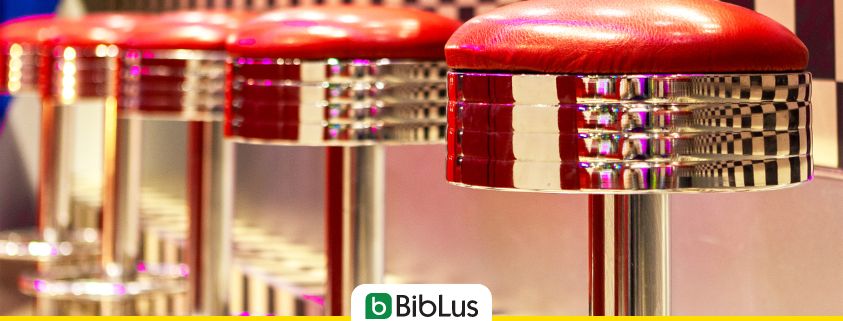
The high stools are generally padded and swivel, often covered in colorful vinyl (the most iconic ones are red), with a chrome steel base, evoking a classic and functional look. - Padded booths
The leather or vinyl booths, with padded seats and backs, are arranged along the walls or in parallel rows. These offer more privacy compared to traditional tables and a sense of comfort for customers, often associated with a convivial and prolonged experience.
The colors are generally bright, such as red, blue, or green, to add a touch of retro style.

Minimum dimensions diner booths
- Tables with laminate or marble tops
The tables, generally covered in laminate or easy-to-clean materials like glossy laminates, represent a practical choice. These durable tops are ideal for a continuous flow of customers. In more refined diners, you can find marble tables or those with chrome edges, completing the classic aesthetic. - Neon signs
Neon light signs are an icon of traditional diners, visible from the outside and often used to attract customers at any hour. Signs with phrases like “Open 24 Hours,” “Diner,” or “Eat Here” are common. Neon adds an unmistakable visual effect, making the diner easily recognizable. - Jukebox
The jukebox is one of the most representative elements of traditional diners. Placed at the entrance or in a corner of the establishment, it allowed customers to select music while they ate, contributing to the convivial atmosphere. In some booths, there were also small tabletop jukeboxes, allowing customers to choose songs directly from their table. - Bright colors and chrome accents
Traditional diners are known for their use of bold and contrasting colors, such as red, white, black, blue, and pastel. These colors are often paired with shiny chrome finishes, found on table edges, stools, and wall details. The walls can be decorated with glazed tiles, mirrors, or colored panels, adding dynamism to the environment. - Simple and classic menu
The menu of a traditional diner is often visible behind the counter or on the wall, written in large letters. It includes a selection of classic American dishes, such as hamburgers, hot dogs, pancakes, milkshakes, eggs, and coffee. The dishes are designed to be served quickly, ideal for fast lunches or snacks at any time of day or night. - Checkerboard floor
One of the most recognizable visual elements is the black and white tiled floor arranged in a checkerboard pattern. This flooring scheme has historical roots and is associated with the era of traditional diners, giving a retro and distinctive touch. - Vintage lighting
The lights in traditional diners often include chrome or steel pendant lamps that illuminate each table or counter. The warm and diffused lighting helps create a welcoming atmosphere. Internal light signs or decorations with exposed bulbs are also often used to emphasize the classic style. - Panoramic windows
Traditional diners have large windows along the main facade, offering a complete view from both inside and outside. This creates a bright environment during the day and an inviting one at night thanks to the lights and neon signs.

Interior design diner: reimagining a traditional diner
Functional Layout and Space Flow
One of the first challenges that technicians face in designing a diner is the optimization of the layout. The typical diner is a dynamic space that must ensure easy access and movement for both staff and customers.
The central counter is a characteristic element, acting as a focal point and must be visible from every corner of the establishment. This counter, often long and welcoming, is accompanied by high stools, creating a friendly atmosphere that encourages quick service.
Upholstered seating, typical of classic American design, offers privacy and comfort. In a contemporary context, these booths can be revisited with more luxurious materials such as leather or velvet, while still maintaining their basic functionality.
The arrangement of spaces must ensure an efficient service flow, with easy access to the kitchen and a good distribution of seating to maximize the number of customers without sacrificing comfort.

Diner interior design project
When it comes to smaller diners, every square meter counts, and smart layout strategies are essential. A popular approach is the concept of open kitchen, which not only makes the space feel larger but also offers customers an engaging view of the cooking process.
Additionally, incorporating multifunctional areas, such as modular tables, can adapt the layout for different group sizes throughout the day. To further maximize limited space, one can consider vertical storage solutions, using wall space to keep the floor open and clutter-free. Finally, arranging seating along the walls helps optimize space, leaving central pathways clear.
In contrast, larger diners benefit from more space, but it is crucial to maintain the cozy atmosphere for which diners are known. An effective strategy is to create distinct zones for varied dining experiences, such as a counter for quick service, a family area, and quieter booths. Flexible seating options, such as movable partitions or different seating styles, can also help to divide and differentiate spaces. Finally, incorporating focal points, such as eye-catching design elements, will add visual interest and help unify the larger space.
Materials and finishes: the elegant side of the diner
While traditional diners were characterized by chrome surfaces and colorful vinyl, contemporary diners offer a sophisticated reinterpretation of these materials. For a successful project, it is essential to choose durable yet visually appealing materials that convey a sense of luxury without losing the cozy essence of a diner.
Here are some material tips to use:
- marble surfaces: using marble for counters or tables adds a touch of elegance while maintaining a robust and easy-to-clean finish;
- brass or copper details: metallic finishes, especially in lighting, table edges, or counter details, evoke a sophisticated atmosphere without being overly flashy;
- natural wood: to soften the overall visual effect, light or dark wood can be used for flooring or wall panels, balancing the cooler elements of the design with a feeling of warmth and welcome.

Interior design diner
The lighting is another key factor in the design of a contemporary diner. The lights should not only illuminate the space functionally but also create the right atmosphere.
Positioned above each table and on the counter, pendant lights add a modern and refined touch. Metals like brass or copper can be used to make the lighting a central decorative element. Even in a dynamic environment like a diner, it is important to create a welcoming feeling. Using warm and soft lights can make the space more intimate while ensuring sufficient lighting for every corner.
Colors and textures: the harmony between past and present
The right use of color can make a big difference in creating the ideal atmosphere for a contemporary diner. While traditional diners were known for bold contrasts (red, black, white), the modern version can opt for a more balanced palette.
Tones like gray, beige, or white create an elegant base to build upon. These colors, combined with natural materials, allow for a modern and clean look.
To add vibrancy to the space, touches of color can be introduced with seating or decorative details in bolder shades, such as emerald green, midnight blue, or mustard yellow.
Contrasting textures: combining different textures, such as glossy and matte surfaces, can add depth and visual interest to the space. Velvet, for example, can be paired with metallic finishes to create a sophisticated contrast.
Decorative details and atmosphere
Decorative details are essential for personalizing the design of a diner and giving character to the space. It’s not just about following a theme, but about creating a unique visual and sensory experience. Decorating the walls with minimalist artwork or black-and-white photographs can add a modern touch without weighing down the space. These decorative elements can be integrated into a more understated design.
Incorporating elements of greenery, such as potted plants or living walls, softens the overall look, adding freshness and vitality.
For those who wish to maintain a connection to the diner tradition, it is possible to include small vintage details, such as a modern jukebox or retro decorations reinterpreted in a contemporary way.

Contemporary diner design interior
Comfort and customer experience
In addition to aesthetic aspects, a diner must offer comfort and practicality. The seating should be comfortable for extended stays, but also durable to withstand daily wear and tear. Furthermore, it is essential to consider acoustics, as restaurants can often become noisy. Sound-absorbing materials such as fabric panels or carpets can help control sound, enhancing the overall experience for customers.
Designing a contemporary diner requires careful consideration of how to combine modern and classic elements to create a welcoming, functional, and aesthetically pleasing space. Architects and interior designers must consider not only aesthetics but also functionality, comfort, and the customer experience. With intelligent and creative design, a diner can become not just a place to eat, but also a design destination that attracts and captivates. If you are interested in this topic, also read:


