
Hotel Interior Design: Ideas and Images for Planning
Many images, ideas, and innovative solutions for hotel interior design: here is a guide to hotel interior design
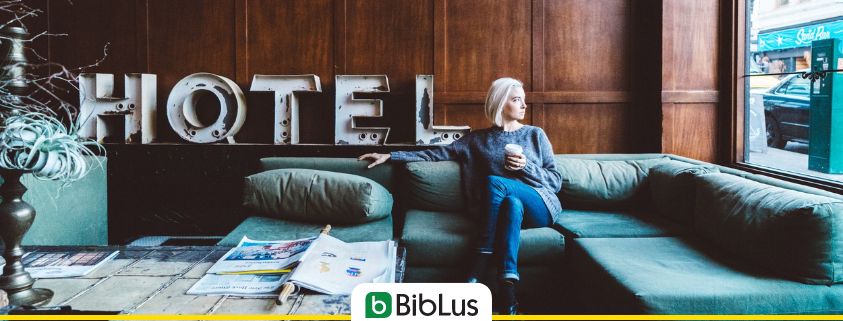
The success of a hospitality establishment (hotel, resort, residence, b&b, etc.) undoubtedly starts with design choices and interior design. It is not just about aesthetics, but about creating a functional, welcoming, and distinctive environment that meets the expectations of guests.
A great support for design can certainly be the use of a 3D interior design software with which to experiment different solutions and recreate environments realistically, to have a clear idea of the final result before it is actually implemented.
If you are a designer and you deal with hotel interior design, here are some ideas and insights on trends and effective solutions to offer an attractive and cutting-edge project.

Hotel interior design ideas
Contents
Hotel interior design
The interior design of a hotel must primarily focus on 4 areas:
- lobby;
- rooms;
- common areas;
- bathrooms.
Let’s see what features make a difference!
Design lobby: the business card of a hotel
The lobby is the first point of contact between the hotel and its guests. A well-thought-out design immediately conveys the character of the hotel. Modern solutions tend to favor a minimalist yet welcoming aesthetic, with open spaces, extensive use of natural light, and custom furnishings.
The use of natural materials such as wood, stone, and glass can create a luxurious yet warm atmosphere. The inclusion of indoor plants adds a natural and green touch, while soft lighting with LED lights integrated into the ceilings creates a sense of depth and comfort.
The main advice, however, is to also respect the mood of the area where the hotel is located. Especially if the target audience is tourists, it is essential that the style reflects the characteristics of the place, even if freely reinterpreted.

Luxury hotel interior design ideas
Hotel Rooms: Comfort and Functionality
Hotel rooms must offer comfort and functionality, but they should also stand out for their design. The most contemporary solutions combine custom furnishings with smart technologies, such as app-controlled lighting or climate management through sensors.
Design ideas: choosing a neutral color palette, with accents in warm tones like beige, gray, or olive green, can create a relaxing environment. Upholstered beds with large headboards add a sense of luxury, while the use of floor-to-ceiling mirrors can enhance the perception of space. When designing the rooms, it is important to carefully consider the cleanliness of the inserted furnishings, avoiding overcrowding of objects. Conveying a sense of hygiene and cleanliness helps guests feel comfortable and positively evaluate their experience.

Hotel Room
Common areas: conviviality and flexibility
Common areas, such as bars, restaurants, and shared workspaces, are now central to hotel interior design. These spaces must be designed to be flexible and multifunctional, offering guests the opportunity to work, socialize, or relax.
Design ideas: the combination of modular furniture with the use of differentiated flooring (for example, carpet in relaxation areas and wooden, marble, stone, or tile floors in operational areas) helps to visually define the spaces. Adjustable lighting and the inclusion of private corners for those seeking more intimacy are details that enhance the guest experience.

Hotel interior design ideas
Luxury Bathrooms: A Spa Experience
Hotel bathrooms are increasingly designed as small spas, with refined designs and luxury details. The use of high-quality materials, such as marble, glass, and precious metals, helps create a relaxing environment.
Design ideas: rain showers with glass panels, freestanding bathtubs, and minimalist faucets in black, brass, or bronze finishes are highly appreciated trends. The inclusion of backlit mirrors and heated floors also adds a touch of comfort and luxury.
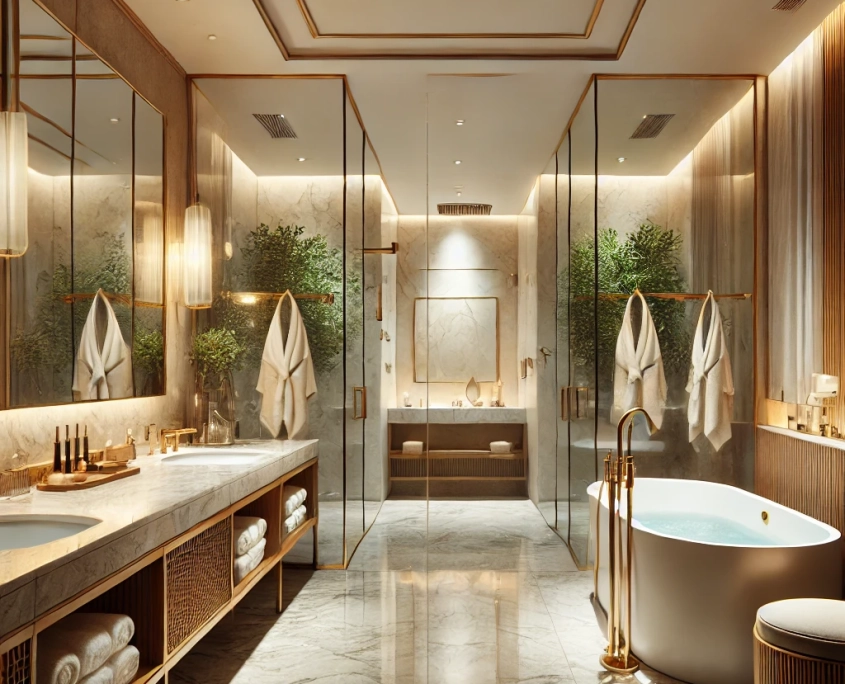
Hotel bathroom | Hotel interior design
The Latest Trends in Hotel Interior Design
Currently, the latest trends in hotel interior design focus increasingly on personalization, sustainability, and technological integration.
Guests seek unique experiences, so many hotels opt for custom designs that reflect local culture or a distinctive aesthetic. The biophilic design, which brings nature indoors through the use of plants, natural materials, and natural light, is particularly popular, enhancing well-being and energy efficiency.
Eco-design is another growing trend, with hotels choosing recycled materials and low-impact technologies.
Finally, the integration of smart solutions, such as automated lighting and climate control, allows for a combination of comfort and efficiency, meeting the needs of a clientele increasingly attentive to quality and sustainability.
Let’s explore some styles that can inspire your project.
- Minimalism
The minimalist style is based on clean lines, tidy spaces, and functionality. Neutral colors like white, gray, and beige dominate, creating a relaxing and sophisticated atmosphere. The furnishings are essential and often modular, with smooth surfaces and minimal details.
Ideal for: hotels that focus on a modern and elegant design, with airy spaces and a distraction-free experience.
- Industrial Style
This style is inspired by industrial spaces, featuring raw and unfinished elements such as exposed brick walls, visible pipes and ducts, and materials like concrete, iron, and raw wood. The colors are dark, with accents of metal and leather, creating an urban and contemporary atmosphere.
Ideal for: Boutique hotels or spaces that want to convey a strong, youthful, and cosmopolitan character.
- Boho-chic
The boho-chic style is characterized by a combination of vintage elements, vibrant colors, soft fabrics, and natural textures like rattan and wood. The spaces are enriched with ethnic rugs, decorated cushions, and handcrafted decorations like macramé.
Ideal for: hotels that aim for a relaxed and artistic atmosphere, with a free and personal design, often in tourist or natural locations.

Hotel interior design ideas in boho-chic style
- Scandinavian style
This style emphasizes functionality and simplicity, using natural materials such as light wood and wool. The colors are predominantly neutral, with occasional pastel touches, creating bright and welcoming environments.
Ideal for: hotels that wish to offer a cozy and intimate experience, with a sober yet elegant design.
- Classic style
Classic design is synonymous with elegance and tradition. It is characterized by refined furnishings, precious materials such as marble and velvet, and decorative details like gilded frames, crystal chandeliers, and heavy drapes. The atmosphere is luxurious and timeless.
Ideal for: high-end hotels or historic venues that focus on a traditional and opulent experience.
- Contemporary style
Contemporary design is a blend of modernity and practicality, featuring furnishings with simple lines and the use of innovative materials such as glass, metal, and leather. The colors are often neutral, but with bold accents like black or red.
Ideal for: modern hotels that aim for an elegant experience without sacrificing comfort and efficiency.

Hotel interior design ideas
- Biophilic design
Biophilic design integrates natural elements into interiors, such as plants, water, and organic materials. It focuses on the connection between humans and nature, enhancing well-being through the use of open spaces, natural light, and optimal ventilation.
Ideal for: eco-hotels or facilities that want to promote well-being and environmental sustainability.

Biophilic design Lobby
- Eclettismo
Eclectic style is a mix of different elements from various styles and cultures. The result is a creative and personalized space that plays with contrasting colors, patterns, and textures. Consistency in design emerges through a careful selection of objects and tones.
Ideal for: boutique hotels that wish to offer a unique and personalized experience.
- Mediterranean Style
This style is inspired by Mediterranean locations, featuring vibrant colors such as blue, white, and terracotta. Interiors often showcase terracotta floors, exposed wooden beams, and lime plastered walls. The furnishings are simple and functional, with a particular focus on artisanal details.
Ideal for: hotels located in seaside areas that want to evoke a sense of freshness and relaxation.
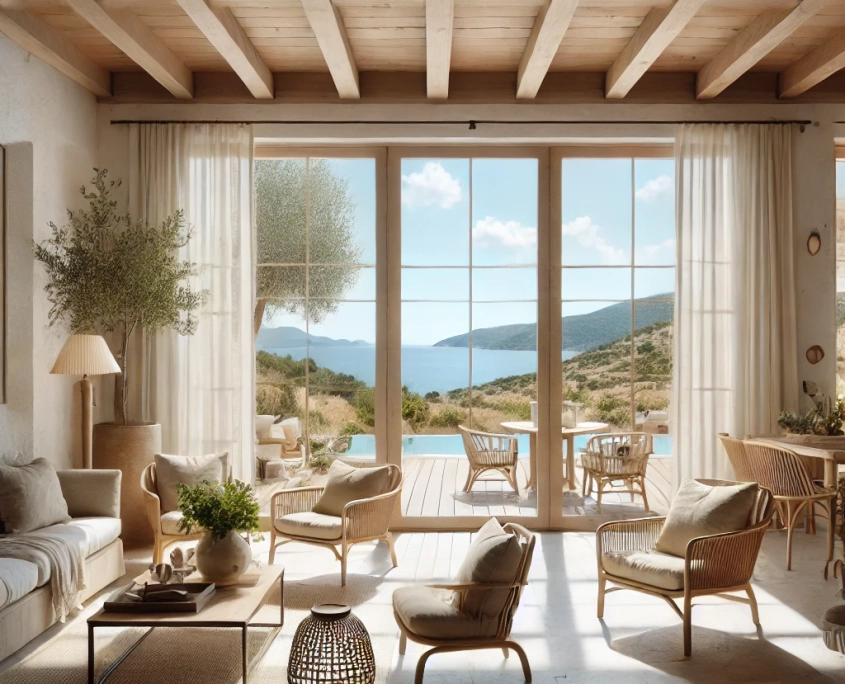
Interior design hotel example in Mediterranean style
- Sustainability and eco-design
The trend towards sustainable design focuses on the use of recycled or low-impact materials, reducing energy waste, and creating healthy environments. The use of solar panels, rainwater recovery systems, and certified eco-friendly materials is becoming increasingly common.
Ideal for: hotels that want to attract environmentally conscious customers and reduce their ecological footprint.
- Futuristic style
Futuristic interiors are characterized by the use of advanced technologies, innovative shapes, and high-tech materials. Curved and fluid lines blend with glossy surfaces and metallic details. LED lighting and interactive elements such as displays and smart controls complete the experience.
Ideal for: hotels that wish to offer a high-tech and innovative experience.
Whatever your design choice, remember that it is important to verify the project outcome before starting work. In this case, you can use a 3D interior design software to create photorealistic renders and organize virtual tours within the 3D model. This can also be a valid way to present the project to the client and have it validated without risking misunderstandings regarding design choices. Furthermore, the 3D model will be necessary to automatically generate project drawings (floor plans, elevation views, cross-sections) and the documentation required for project approval (bill of quantities, work schedule, etc.).
Alternative types in the hotel sector
In recent years, various types of innovative hotels have emerged that move away from traditional models, often responding unconventionally to the new needs of modern travelers.
Here are some of the most interesting:
Capsule hotels
Originating in Japan, capsule hotels offer an extremely compact and minimalist accommodation solution. Rooms are replaced by “capsules” or small private modules where guests can sleep. These hotels are designed to provide maximum functionality in very small spaces, often at very affordable prices.
Features: small spaces, minimalist design, shared facilities such as bathrooms and lounges.
Ideal for: solo travelers, people in transit, or tourists looking for budget solutions.
Boutique hotels
Boutique hotels are small luxury hotels, generally independent, that offer a personalized and unique experience. Each property has its own distinctive design, often related to local culture or a specific theme, and a limited number of rooms to ensure more intimate and attentive service.
Features: customized design, attention to detail, exclusive customer service.
Ideal for: travelers seeking unique and high-quality experiences.
Eco-hotels
Eco-hotels focus on sustainability and reduced environmental impact. These hotels use eco-friendly materials, energy-saving systems, solar panels, and practices that promote responsible tourism. The goal is to offer a stay that respects nature and minimizes resource waste.
Features: recycled or eco-friendly materials, energy efficiency, biophilic design, green spaces.
Ideal for: environmentally conscious travelers who care about sustainability.
Diffused hotels
The diffused hotel is an innovative hospitality model that develops in small villages or communities, where guest rooms are distributed across separate buildings, often renovations of historic or traditional houses. The concept is to offer a more authentic experience integrated with the territory.
Features: rooms distributed in different structures, strong integration with the local community, authentic cultural experience.
Ideal for: travelers interested in local culture and staying in unconventional places.
Pop-up hotels
Pop-up hotels are temporary structures created for specific events, festivals, or particular seasons. Typically, these are designer accommodations built with materials and construction techniques that make them easily removable and can be installed in unique locations such as beaches, parks, or urban areas.
Features: temporary structures, innovative design, unique location.
Ideal for: adventurous travelers or those attending special events.
Smart hotels
Smart hotels use advanced technology to enhance the guest experience. This can include rooms controlled via apps, automated check-in and check-out, and the integration of artificial intelligence to personalize services. The environments are designed to be ultra-modern, with a focus on efficiency and comfort.
Features: advanced technology, automation, digital service management.
Ideal for: tech-savvy travelers and business travelers.
Glamping (glamorous camping)
Glamping combines the luxury of high-end hotels with the natural experience of camping. Accommodations can include luxury tents, yurts, treehouses, or cabins, offering all modern comforts in natural and scenic settings.
Features: accommodations immersed in nature, luxury comfort, eco-friendly materials.
Ideal for: nature lovers who do not want to give up comfort.
Themed hotels
Themed hotels are designed around a specific concept or narrative, such as historical eras, movies, pop culture, or exotic themes. Each room or part of the hotel can reflect the chosen theme, offering guests an immersive and fun experience.
Features: thematic setting, immersive design, personalized experiences.
Ideal for: travelers looking for a fun and unconventional experience.
Micro-hotels
Micro-hotels offer small-sized rooms but with functional and high-tech design. These hotels aim to optimize space, offering only the essential services for the stay, focusing on a well-equipped common area for socializing or working.
Features: compact rooms, advanced technology, large common spaces.
Ideal for: urban travelers looking for efficient and convenient accommodation.
Floating hotels
Floating hotels are hotels that float, often located on ships or platforms in water. These hotels offer a unique stay experience on the sea or lakes, with rooms overlooking the water and services that include boat excursions or diving.
Features: accommodation on water, panoramic views, marine experience.
Ideal for: travelers seeking an exclusive experience related to the sea.


