
Construction Document Sharing: Efficient Collaboration Tools
What is Construction Document Sharing and what are the challenges and best solutions for managing and sharing documents in construction projects efficiently

In the construction industry, effective information management is now a determining factor for the success of any project. The increasing complexity of works, combined with the need to coordinate multidisciplinary and distributed teams, as well as regulatory demands, makes it essential to adopt digital solutions capable of ensuring a structured, secure, and always updated sharing of documents.
In this context, Construction Document Sharing plays a central role: not only as an operational process but as a strategic element to improve collaboration, control, and project quality. The adoption of an Common Data Environment (CDE) enables the centralization of information, reduction of errors, and optimization of workflows, especially in BIM-managed projects.
Specific digital platforms for the sector allow for integrated management of documents, models, and communications, providing concrete support to designers, companies, and professionals in managing the entire lifecycle of the work. Understanding how Construction Document Sharing works and choosing the right tools is therefore the first step towards successfully tackling the challenges of digital transformation in the construction world.
Contents
- Construction Document Sharing: what it is and why it is essential
- Main critical issues in Construction Document Sharing
- Best tools for Construction Document Sharing
- How to choose the right Construction Document Sharing tool
- Construction Document Sharing in BIM flows
- Common Mistakes to Avoid in Construction Document Sharing
- FAQ
Construction Document Sharing: what it is and why it is essential
Construction Document Sharing represents the set of processes, technologies, and procedures used to manage and share technical documentation within a construction project. It is not simply about archiving files, but about ensuring that all information is accessible, updated, consistent, and traceable throughout the entire lifecycle of the work.
In the AEC sector (Architecture, Engineering & Construction), the volume of documents produced is enormous: graphic elaborates, BIM models, quantity takeoffs, technical reports, schedules, contractual documentation, etc. Effective management of this data is essential to avoid errors, delays, and misunderstandings among the various actors involved.
With the digital evolution of the sector, Construction Document Sharing has shifted towards centralized environments, such as Common Data Environments (CDE), which allow for structured and collaborative management of information.
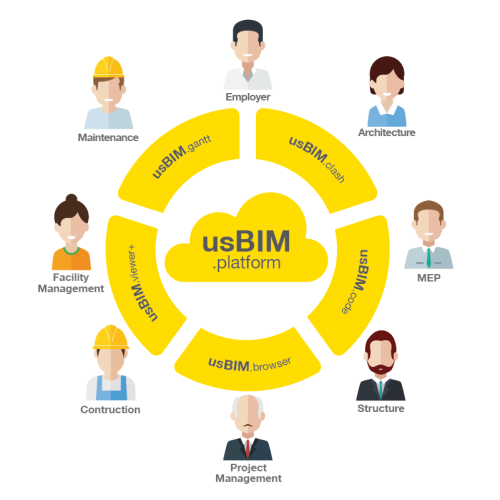
Main critical issues in Construction Document Sharing
Despite technological advancements, sharing construction documents still presents several operational challenges. Let’s look at them in detail.
Version management and outdated drawings
One of the most common problems is the difficulty in keeping document versions aligned. The use of duplicate or improperly updated files can lead to the circulation of obsolete elaborates.
This poses significant risks on site, such as execution errors, rework, and increased costs. An effective Construction Document Sharing system must include features for automatic version control, with complete traceability of changes and unique identification of documents.
Communication gaps between teams
The lack of structured communication between the different project teams represents another relevant criticality. Often information is exchanged via email or informal channels, generating misalignments and data loss.
An advanced platform should allow communication directly on documents, through comments, reviews, and approval workflows, improving coordination among disciplines and ensuring the traceability of exchanges.
File size and format issues (CAD, BIM, PDF)
The technical documents used in the construction sector are often complex and large. BIM models, multilayer CAD files, and high-resolution PDFs can create difficulties in management and sharing.
It is essential that the tools used support:
- heterogeneous formats;
- compression and efficient file management;
- interoperability between different software.
Data security and access control
The protection of information is a crucial aspect. Project documents contain sensitive data that must only be accessible to authorized users.
A Construction Document Sharing system must guarantee:
- role-based permission management;
- secure authentication;
- tracking of user activities.
Best tools for Construction Document Sharing
Choosing the right tools is key to ensuring effective and secure management of documentation. Selecting a suitable platform becomes essential for managing the process efficiently.
What characteristics should it have?
Let’s find out right away!
Specific platforms for the construction sector
Platforms dedicated to the AEC sector offer features designed to meet the typical needs of construction projects. Among these:
- advanced revision management;
- approval workflows;
- integration with BIM models;
- mobile access for the site.
These tools allow overcoming the limitations of generic file sharing solutions, improving control and collaboration.
BIM collaboration tools (IFC sharing and models)
Tools based on BIM methodology allow going beyond simple document sharing, introducing an integrated approach based on information models suitable for managing the entire lifecycle of the work.
Sharing via IFC format enables interoperability between different software and disciplines, facilitating:
- design coordination;
- interference checking;
- integrated project analysis.
How to choose the right Construction Document Sharing tool
The selection of the most suitable platform must be made considering various technical and organizational factors.
Project size and complexity
Complex projects require advanced tools that can manage large volumes of data, large files, and numerous simultaneous users while ensuring high performance and stability.
BIM integration requirements
In the presence of BIM flows, it is essential that the platform supports:
- open formats like IFC, BCF, etc.;
- visualization and management of BIM models of any size and format;
- integration with BIM authoring software.
Collaboration needs (internal and external teams)
The platform must facilitate collaboration among all involved actors, both internal and external to the organization, ensuring controlled access and ease of use.
Budget and scalability
The cost of the solution must be evaluated in relation to the benefits. It is also important to consider scalability, that is, the tool’s ability to adapt to future projects or business growth.
Ease of use and training
An effective tool must be intuitive and easily adoptable. The need for training should be minimal, to promote rapid implementation and widespread use.
Construction Document Sharing in BIM flows
Within BIM flows, Construction Document Sharing assumes a central role in information management.
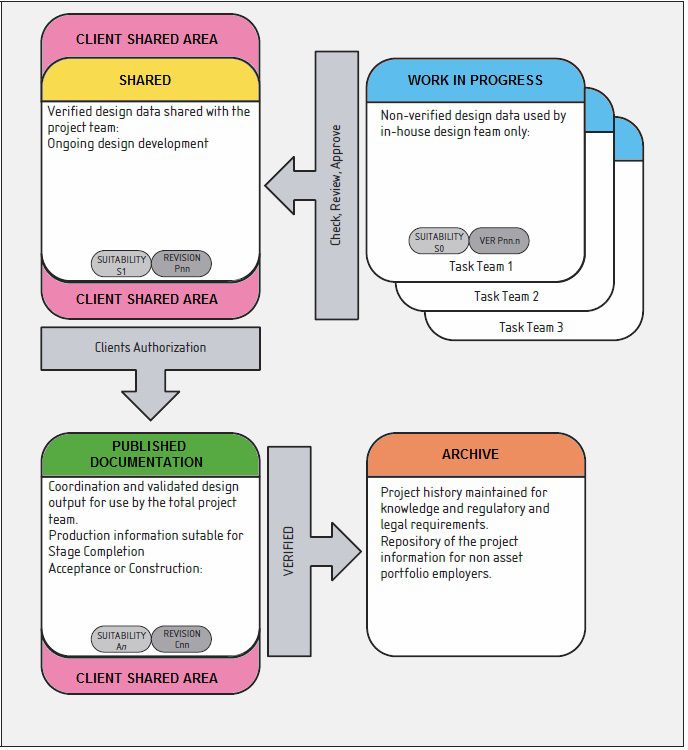
Operation of the CDE in Pas 1192-2
Sharing of IFC models and federated models
IFC models allow for the creation of federated models, which integrate various disciplines into a single coordinated environment.
This approach enhances the overall vision of the project and facilitates the identification of interferences and critical issues.
Coordination between disciplines through shared data
Structured data sharing enables effective coordination among architects, engineers, and contractors. Every modification is made available in real-time, improving project consistency.
Linking documents to 3D models
In BIM, it is possible to associate documents directly with the elements of the 3D model, creating an integrated, comprehensive, and dynamically updated information system.
This allows for the linking of:
- technical data sheets;
- certifications;
- operation and maintenance manuals;
- etc.
In this way, the 3D geometric model becomes a true BIM model, containing the information necessary for the management of the asset throughout its life cycle (from design to demolition).
Advantages of open BIM in document sharing
The open BIM approach, based on open standards, allows for greater interoperability among different software and stakeholders.
The main advantages include:
- vendor independence;
- greater flexibility;
- ease of data exchange.
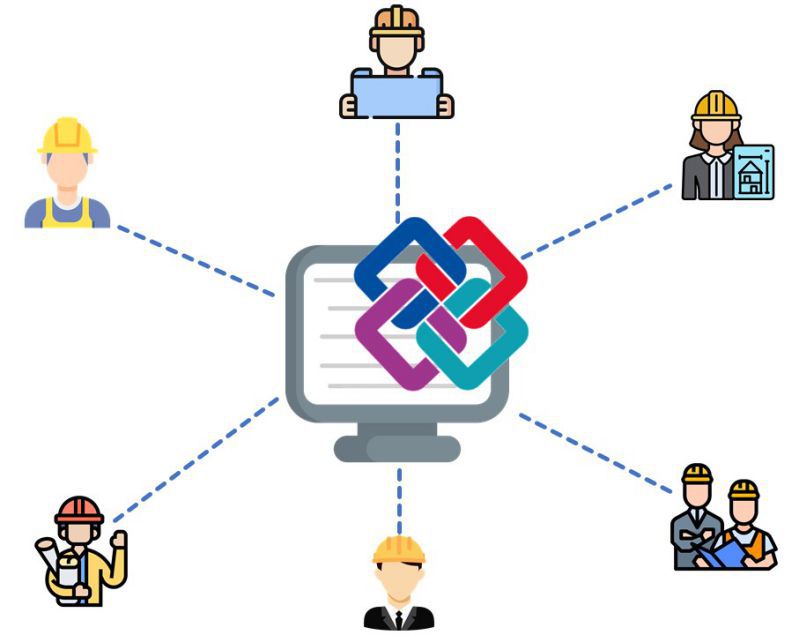
What are the benefits of CDE
Common Mistakes to Avoid in Construction Document Sharing
Even with advanced tools, some organizational criticalities can compromise the effectiveness of the system.
Using Generic Tools for Complex Projects
Non-specific solutions for the AEC industry often fail to manage the complexity of construction projects.
Absence of Version Control
The lack of a structured versioning system leads to errors and inconsistencies in documents.
Poor File Organization
A disorganized structure makes it difficult to retrieve information and increases the risk of using incorrect documents.
Neglecting Site Needs
It is essential to consider the needs of field operators, ensuring easy and immediate access to documents even from mobile devices.
FAQ
What is Construction Document Sharing?
Construction Document Sharing is the set of processes, technologies, and procedures used to manage and share technical documentation within a construction project. It ensures that all information is accessible, up to date, consistent, and traceable throughout the entire lifecycle of the work.
Why is it essential in AEC projects?
It is fundamental because it allows for the coordination of multidisciplinary teams, reduces errors, avoids delays, and ensures that all participants have access to the latest and correct documents, improving collaboration and quality control of the project.
What are the main criticalities in Construction Document Sharing?
The criticalities include: management of versions and outdated drawings, communication gaps between teams, issues related to file sizes and formats (CAD, BIM, PDF), and data security with access control.
How to choose the right Construction Document Sharing tool?
The choice should consider: the size and complexity of the project, BIM integration requirements, collaboration needs between internal and external teams, budget and scalability, ease of use, and training requirements. It is important to select a platform specific to the AEC industry.
What is the role of Construction Document Sharing in BIM flows?
In BIM flows, it allows sharing of IFC and federated models, coordination between disciplines via shared data, and linking documents to 3D models, creating an integrated information system throughout the entire lifecycle of the work.
What common mistakes to avoid in Construction Document Sharing?
The most common mistakes include using generic tools for complex projects, the absence of version control, poor file organization, and neglecting site needs, such as immediate access to documents from mobile devices.


