
IoT smart home for residential comfort
The application of IoT to smart homes: challenges and roles of construction industry designers to keep up with innovation

In recent years, the concept of smart home has gained increasing relevance, transforming the way we live and interact with our living spaces. The technology that makes this transformation possible is the Internet of Things (IoT), which allows the connection and interaction of smart devices within the home. For architects, engineers, and designers, understanding how to integrate IoT in a smart home is essential to meet the needs of a constantly evolving market.
In this perspective, it is also essential to understand which tools and BIM IoT platforms to use to manage assets intelligently, starting from the digital twin.
Contents
What is a smart home?
A smart home, or intelligent home, is a residence equipped with a network of connected devices that communicate with each other and can be remotely controlled via mobile applications, voice assistants, or centralized systems. These devices include a wide range of advanced technologies, such as smart thermostats, lights, locks, appliances, security systems, and environmental sensors, all interconnected through the Internet of Things (IoT).
The heart of a smart home is the ability for automation and remote control. IoT devices within the home are programmable to perform specific actions based on certain events or user preferences. For example, a smart thermostat can adjust the temperature based on the presence of occupants, saving energy when the house is empty and creating a comfortable environment upon their return. Smart lights can turn on and off automatically based on the time of day or voice commands, improving both energy efficiency and security.
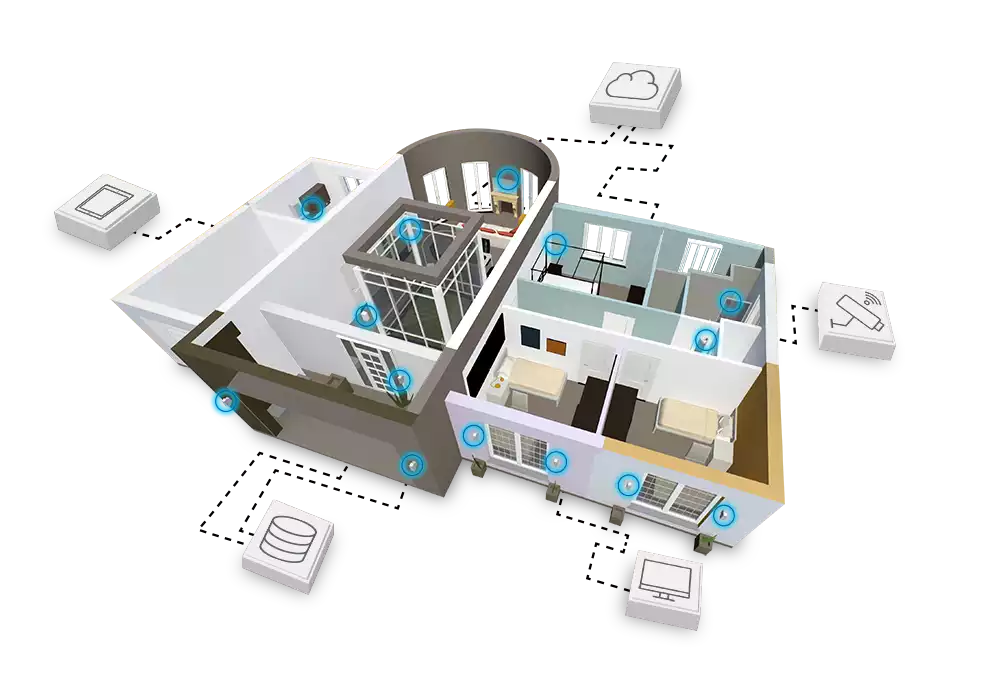
Management of a smart building with IoT systems
The integration of IoT systems in a smart home goes beyond individual devices, extending to the creation of an interconnected ecosystem that can be managed through a single IoT platform. These platforms offer a holistic view of the home, allowing monitoring and control of all devices from a single interface. This not only simplifies management but also enables the creation of complex automated scenarios, such as activating soft lighting and relaxing music at bedtime.
For professionals in the field, such as architects, engineers, and designers, understanding the potential and characteristics of smart homes is essential to meet the needs of modern clients and design cutting-edge residences. Knowledge of IoT technologies and their integration into construction projects allows offering solutions that not only improve the quality of life for occupants but also contribute to creating more sustainable homes.
The benefits of IoT in smart homes
Integrating IoT technology into smart homes offers a range of significant advantages that can profoundly transform how homes are designed and managed.
One of the main benefits is energy efficiency. Thanks to IoT devices, it is possible to monitor and optimize energy consumption in real-time. For example, smart thermostats can adapt automatically to occupants’ habits, adjusting the temperature to minimize energy waste and associated costs. This not only promotes environmental sustainability but also meets the increasing demands for energy efficiency in contemporary construction projects.
Another crucial aspect is the security provided by IoT systems. It is possible to integrate surveillance cameras, motion sensors, and smart locks into a single centralized platform, allowing users to monitor their home security more efficiently and responsively. Real-time notifications and the ability to control security systems remotely offer an unprecedented level of protection, increasing occupants’ peace of mind and adding value to residential projects.
Furthermore, IoT significantly contributes to improving comfort and convenience in living spaces. Home environments can be automated to meet users’ daily needs, with lights turning on as someone passes by, appliances activated through voice commands, and air conditioning systems adjusting automatically to ensure maximum comfort.
For architects and designers, this means being able to offer housing solutions that significantly enhance quality of life, meeting the expectations of an increasingly demanding and technologically informed clientele.
In summary, adopting IoT in smart homes presents extraordinary opportunities for industry professionals who want to propose advanced management systems for:
- energy efficiency;
- security;
- living comfort;
- resource optimization.
Challenges in IoT integration
Despite the numerous advantages, integrating IoT in smart homes presents some challenges for designers:
Interoperability: Ensuring that devices from different manufacturers can communicate effectively is essential. Open standards and communication protocols like Zigbee, Z-Wave, and Wi-Fi are crucial to ensure compatibility.
Data security: Protecting personal data is crucial. Implementing robust security measures, such as data encryption and two-factor authentication, is essential to safeguard user information.
Scalability: Designing solutions that can grow and adapt to future technological needs is vital. Smart homes should be able to integrate new devices and technologies without requiring invasive restructuring.
Being prepared for innovation is essential to adopt effective design strategies for IoT in Smart Homes.
Flexible design: Creating living spaces that can easily adapt to technological evolution. Using conduits and wiring systems that facilitate the installation of new devices.
Focus on User Experience: Considering the end user experience. Interfaces should be intuitive and easy to use, and technologies should genuinely enhance residents’ quality of life.
Sustainability: Integrating IoT solutions that promote environmental sustainability. The use of sensors for monitoring air quality, water consumption, and energy can help make homes more eco-friendly.
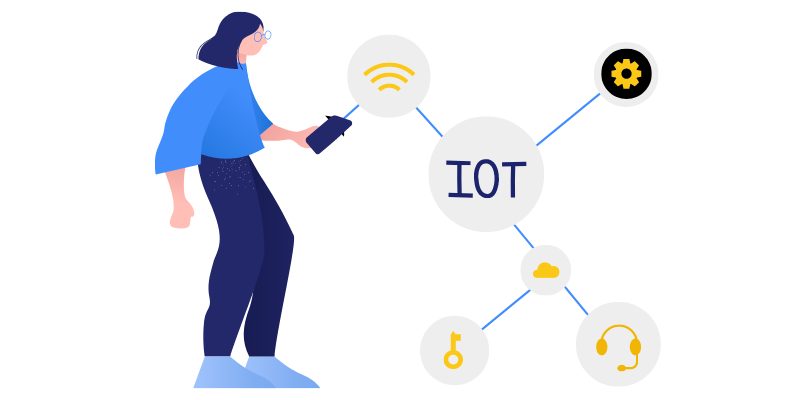
BIM-IoT-VRI
The role of designers
Architects, engineers, and designers, in general, play a crucial role in shaping the smart homes of the future. Their expertise in combining aesthetics, functionality, and technology is essential for creating living spaces that are not only intelligent but also comfortable and safe.
The integration of IoT requires close collaboration among different disciplines. Architects, electronic engineers, cybersecurity experts, and designers must work together to develop optimal solutions.
IoT technology is constantly evolving, and it is the professionals’ task to stay updated on the latest trends and innovations to offer cutting-edge solutions to their clients.
Furthermore, informing and educating clients about the benefits and potential of IoT is essential: a well-informed client will be more likely to adopt innovative solutions and understand their value.
Management of IoT Systems through the Building Information Modeling (BIM) House Model (Digital Twin).
The management of IoT systems in a smart home finds a powerful ally in the BIM methodology (Building Information Modeling), which allows the creation of a digital twin of the building. The digital twin, an accurate digital replica of the physical house, integrates all data related to the installed IoT components and systems.
This model provides technicians with a detailed and real-time overview of the operational status of each device, facilitating predictive maintenance and performance optimization. Through the BIM model, it is possible to monitor energy efficiency, detect anomalies in security systems, and manage environment automation with greater precision. Furthermore, integration with the digital twin allows simulating future scenarios and evaluating the impact of new technologies or structural changes, making building management more efficient and proactive.
For architects, engineers, and designers, the use of the digital twin represents a leap forward in the design and management of smart homes, ensuring that each IoT component functions harmoniously to improve the comfort, security, and sustainability of the residence.
To learn more, read also: The main IoT applications in construction
or watch a video.


