
Rework in Construction: Causes, Costs, and Prevention Strategies
Discover how to reduce rework in construction at job sites by analyzing causes, costs, responsibilities, and strategies to improve project timelines and budgets
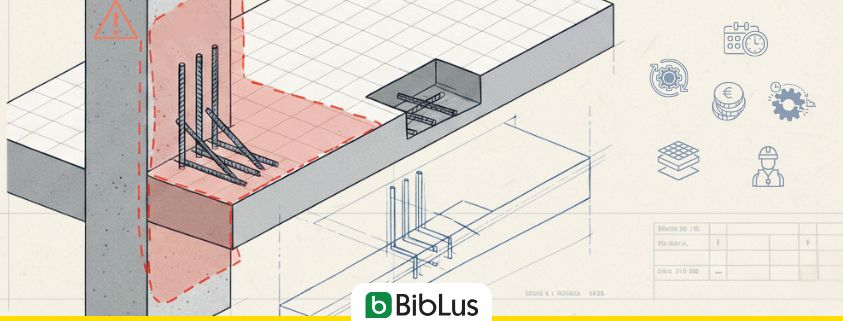
Rework in construction represents one of the most recurring and impactful issues on job sites. Design errors, execution inefficiencies, lack of coordination, and changes during execution significantly affect the progress of work, leading to delays, increased costs, and a reduction in the final quality of the project. Reducing rework requires a structured approach that starts from the quality of the design and continues throughout the execution phase, through clear organizational processes and appropriate support tools.
In this context, solutions such as BIM software for integrated design and software for managing construction site issues serve as operational support to improve coordination, the quality of information, and activity control.
In this article, we analyze the main causes of rework in construction, their economic impact, and the most effective operational strategies, including digital ones, to limit their impact on construction projects.
Contents
- What is rework in construction and its impact on the industry
- Types of rework in construction: operational classification and recurring cases
- Why rework in construction is so expensive: data and main causes
- Practical analysis of the operational causes of rework on construction sites
- Responsibilities in rework in construction: roles, recurring errors, and impacts on the project
- Cost indicators and KPIs of rework in construction: how to measure its real impact
- Digital Tools and Processes to Reduce Errors on Construction Sites
- Organizational Best Practices to Reduce Rework
- FAQ – Rework in Construction
What is rework in construction and its impact on the industry
Rework in construction encompasses all those work activities that are performed again at a job site during the execution of an intervention.
Rework in construction is typically necessary when, due to different causes, the work has not been executed correctly, thus generating construction defects, or non-compliance with the project and technical standards in general.
Rework in construction has a significant impact on the construction process within a job site: having to redo one or more tasks because they were performed inadequately causes delays in delivery times and an increase in costs, with negative effects on the entire project.
Types of rework in construction: operational classification and recurring cases
Not all rework in construction is the same and can be classified based on the type of work involved and the impact they generate on timelines, costs, and project organization.
Structural reworks include, for example, the resumption of pours, correction of non-compliant reinforcements, or adjustment of incorrectly executed load-bearing elements; these are the most critical reworks because they halt the advancement of subsequent phases and often require additional technical checks.
Architectural and finishing reworks involve partitions, surfaces, flooring, waterproofing, and completion works that have been executed out of tolerance or are inconsistent with the execution details, directly affecting perceived quality and delivery times.
Very common are also the system reworks, typical of complex job sites, arising from interferences between systems, elevation errors, uncoordinated pathways, or incompatibilities with structures and finishes, especially when coordination between disciplines has not been validated during the design phase.
These are complemented by documentary and compliance reworks, less visible but equally relevant, generated by outdated documents, delayed received changes, inconsistencies between drawings, bills of quantities, and specifications, or failure to comply with technical standards. Correctly distinguishing the various types of reworks allows for more precise identification of root causes and the adoption of targeted preventive strategies, reducing the risk of intervening only when the problem has already translated into delays and extra costs.

Types of rework in construction
Why rework in construction is so expensive: data and main causes
Depending on the type of project and the geographical context, numerous academic studies and industry analyses show that rework in construction represents one of the most significant hidden costs in construction. In fact, the incidence of rework in construction ranges between 1% and 20% of the total cost, with most studies focused between 4% and 10%.
Among the most common factors are:
- design omissions;
- inaccurate documents;
- lack of organization;
- poor communication between parties;
- coordination errors;
- late modifications;
- errors in quality control.
Practical analysis of the operational causes of rework on construction sites
Among the operational causes of rework in construction sites are design errors, which include all the oversights, omissions, or irregularities that can be inadvertently made during the project execution phase, compromising safety, functionality, and quality of the final result. These errors are often due to distractions, poor communication, and collaboration between parties, or the complexity of the project itself.
Another cause of rework on construction sites is the production of inaccurate graphic documents. Plans, elevations, or sections that are not detailed or are inconsistent with each other, the lack of construction details and specifications can create misunderstandings on site and lead to work being performed incorrectly and not in accordance with the original project.
A very relevant cause of rework in construction is certainly inefficient coordination during the execution phase: lack of organization, errors in quality control, and poor communication are the predominant elements.
Responsibilities in rework in construction: roles, recurring errors, and impacts on the project
Rework in construction is often the result of responsibilities distributed throughout the entire lifecycle of the project, from the design phase to the execution phase. Correctly identifying the involved role does not mean assigning blame, but understanding where the process has been interrupted or lost effectiveness.
The designer plays a decisive role when incomplete, inconsistent, or insufficiently detailed documents generate incorrect interpretations on site; omissions, undetected interferences, and poor coordination among disciplines are among the most frequent causes of rework that arise upstream of the construction process.
The construction management (CM) is central to preventing rework during the execution phase: untimely checks, intermittent quality verifications, or ineffective management of ongoing changes can allow the continuation of non-compliant work, making it necessary to redo the work in advanced stages of the construction site.
An equally critical role is that of the contractor, responsible for operational organization, correct execution of the work, and daily activity control; execution errors, deficiencies in training personnel, poor planning of work sequences, or ineffective communication with other project actors are factors that significantly increase the risk of rework.
Finally, subcontractors contribute to rework when they operate without adequate alignment with the executive project, with non-homogeneous quality standards, or without effective coordination with other works, generating incompatibilities and interferences that emerge only in advanced phases. Reducing rework therefore requires a clear definition of responsibilities, structured information flows, and continuous coordination among all parties involved, rather than isolated corrective interventions after a problem has already manifested.
Cost indicators and KPIs of rework in construction: how to measure its real impact
To manage and reduce rework in construction, it is not enough to identify its causes: it is essential to measure its impact through cost indicators and specific KPIs, capable of making the phenomenon objective and monitorable over time.
One of the most commonly used indicators is the cost of rework, expressed as an absolute value or as a percentage of the total project cost; this KPI allows for assessing how much rework activities affect the initial budget and for comparing different projects or work phases.
Equally relevant is the impact of rework on time, measured in additional days or hours compared to the schedule, allowing the estimation of the direct impact on delivery delays and the efficiency of the production process.
Among the most effective operational KPIs are also the number of rework instances per project phase, the average cost per single rework, and the frequency of rework by discipline (structures, architecture, systems), useful indicators for identifying recurring critical areas.
In a more advanced perspective, monitoring the ratio between prevention costs and rework costs allows for evaluating the effectiveness of investments in design, coordination, and quality control. The systematic adoption of these KPIs allows rework to be transformed from an unforeseen event into a controlled variable, supporting more informed decisions and continuous improvement strategies in construction projects.

Impact of rework on costs
Digital Tools and Processes to Reduce Errors on Construction Sites
In the digital age, there are numerous tools capable of reducing errors on construction sites. Utilizing a 3D building design software can assist in this task as it allows you to automate the production of documents and graphic boards, with automatic updates for every change made to the original project. This will enable the production of more precise and accurate documents.
A BIM site management software allows you to automatically design the construction site, identifying potential issues in advance, preventing coordination and organization errors.
A digital construction site, with real-time sharing of data, projects, changes, and updates between technical office, site management, suppliers, and workers, creates a more transparent and collaborative work environment.
Creating a safe, efficient, and transparent work environment means reducing errors and rework in construction, reducing cost increases and time extensions.
Organizational Best Practices to Reduce Rework
To reduce rework on the construction site, it is necessary to:
- develop an integrated BIM design: by using a BIM software, you can create the complete model of the construction that will be carried out, which will help reduce errors during the execution phase;
- develop an adequate work scheduling: a BIM project management software allows for planning activities to be carried out, both in the short and long term, setting targets and deadlines, thus allowing for optimal forecasting of work processes, reducing the risk of rework;
- use monitoring tools: drones, IoT sensors, and management software allow for the automatic monitoring of work progress, ensuring safety and promptly addressing inefficiencies;
- personnel management: workers must always be aware of all the activities to be carried out and trained on all construction processes, in order to avoid problems and delays;
- involve stakeholders in decisions: collaborating and communicating proactively with managers and workers, subcontractors, and suppliers creates a shared environment.

Organizational best practices to reduce rework
It therefore emerges that reducing rework in construction requires a structured approach that begins with design quality and extends through the daily management of the construction site. As discussed, design errors, coordination gaps, and operational inefficiencies are not isolated events, but rather the result of fragmented processes and misaligned information throughout the project lifecycle. In this context, adopting BIM software for integrated design provides concrete support in improving document consistency, coordinating disciplines, and identifying critical issues before construction begins—thereby reducing the risk of rework from the earliest project stages.
Similarly, since much rework arises during the execution phase, using software for managing construction site issues enables more effective control of activities, information flows, and operational checks. This fosters better collaboration between the technical office and on-site teams, allowing inefficiencies to be addressed promptly.
Integrating digital tools within clear organizational processes makes it possible to transform rework in construction from a recurring problem into a controllable variable—enhancing reliability, timelines, and the overall economic sustainability of construction projects.
FAQ – Rework in Construction
What is meant by rework in construction?
Rework in construction refers to the need to redo or correct work that has already been completed because it does not comply with the design, technical specifications, or required quality standards. Rework can occur at any stage of the construction process and directly affects project timelines and costs.
What are the main causes of rework in construction?
The most common causes of rework include design errors, inaccurate drawings, poor coordination between disciplines, ineffective communication among stakeholders, and insufficient or delayed quality controls during the execution phase. Late design changes and inefficient operational management also contribute significantly.
How much does rework impact project costs?
The financial impact of rework can vary considerably depending on the type of project and its context. However, it is widely recognized as one of the most significant hidden costs in construction. In many cases, rework accounts for a substantial percentage of the overall project budget and can also lead to delays in delivery schedules.
Which types of rework are most common on construction sites?
The most frequent types of rework involve structural, architectural, MEP (mechanical, electrical, and plumbing), and documentation-related aspects. Structural rework is typically the most critical due to its impact on timelines and work sequencing, while MEP and finishing rework often arise in complex projects because of clashes or coordination gaps.
How can rework be measured objectively?
Rework can be assessed using specific cost indicators and KPIs, such as the percentage of rework costs relative to the total project budget, the impact on execution timelines, the number of rework instances per phase or discipline, and the average cost per corrective intervention. These metrics enable consistent monitoring and performance improvement over time.
Why is preventing rework more effective than correcting it?
Preventing rework is more effective because corrective actions taken after work has been completed typically result in higher costs, delays, and reduced productivity. Thorough design development, continuous coordination, and structured quality control processes significantly reduce the likelihood of errors and subsequent rework.


