
How can we insert and edit an IFC object in a BIM project?
How can we insert and edit an IFC object in a BIM project? Here are a series of videos produced with a BIM software for architectural design.

One of the main characteristics of using the BIM design methodology is the collaboration aspect between the various technical roles involved in the different phases of a structure’s life-cycle to insert, extract, update or modify information from within the model itself.
For example, the architect defines shapes and geometries in order to obtain the 3D model; The structural designer defines the necessary structural members (beams, columns, walls, foundations, etc.).
From here, the need for a standard format that allows secure interoperability and interchange of data, without introducing error and/or loss of information. This in essence, is the purpose of the IFC format.
The IFC (Industry Foundation Classes) is designed to process all building information through its entire lifecycle, from an extensive feasibility analysis to its implementation and maintenance, through various design and planning phases.
Let’s have a look at how an architectural BIM Design software allows you to insert and edit IFC objects within a BIM project.

Contents
- What is the IFC format and why is it essential for BIM collaboration
- How to correctly import an IFC object into a BIM project
- How to update an already imported IFC object and manage its modifications
- How to solve the most common problems with IFC files
- Final Checklist – Quality Check of the IFC File
- FAQ for Inserting and Modifying an IFC Object
What is the IFC format and why is it essential for BIM collaboration
The IFC (Industry Foundation Classes) format represents the open international standard for data sharing in BIM projects. It was developed by buildingSMART International with the aim of ensuring interoperability among the various software used throughout the life cycle of a building, from design to management.
Within a BIM project, each element (such as walls, beams, systems, or doors) can be represented by an IFC object, which is a digital entity that contains not only the geometry but also all the technical, performance, and functional information of the element itself.
The fundamental advantage of the IFC format is that it allows professionals from different disciplines (architecture, structures, systems, facility management) to collaborate without the constraints of proprietary software. In other words, an IFC object in a BIM project can be opened, read, and managed in any compatible environment, ensuring clear communication and no data loss among all parties involved.
Differences between IFC2x3, IFC4, and IFC4.3 versions
The evolution of the IFC format reflects the growth of the BIM methodology and the need to ensure greater interoperability among software, disciplines, and application areas. Each new version has expanded the scope and descriptive capacity of IFC objects in a BIM project, improving the accuracy of information and the consistency of exchanged models. The three most widely used versions today, IFC2x3, IFC4, and IFC4.3, represent the main milestones of this evolution.
IFC2x3: the reference basis for interoperability
Published in the early 2000s, IFC2x3 long served as the reference version for BIM workflows. Its strength lies in the stability of the format and the wide software compatibility, characteristics that have favored its adoption worldwide. IFC2x3 allowed for the first time the representation of architectural, structural, and system elements of a building using a common language, enabling the exchange of models between different programs (such as Revit, Archicad, Tekla, Allplan, Edificius, etc.) without loss of essential information.
However, the data structure of IFC2x3 has significant limitations in managing complex and parametric geometries, as well as in the detailed definition of custom properties. IFC objects in this version tend to be less data-rich and more focused on geometric representation than informative. Additionally, the lack of extensive support for MEP domains and facility management processes reduces the effectiveness of using IFC2x3 in the post-design phases of the building life cycle.
On the geolocation front, IFC2x3 introduces a first level of geographic information through the IfcSite entity, which allows for the insertion of latitude, longitude, and reference elevation. However, this is only indicative georeferencing and not compliant with real coordinate systems, lacking references to map projections or CRS (Coordinate Reference System). Consequently, IFC2x3 models could not be correctly aligned with GIS maps or geospatial surveys, limiting their use in infrastructure or territorial projects.
Discover GeoAI with usBIM.geotwin
IFC4: greater semantic quality and informational precision
The IFC4 version, published in 2013, marked a decisive step forward towards the maturity of the format. In addition to improving the consistency and clarity of the data model, it introduces a new semantic structure that allows for more accurate descriptions of relationships between objects, materials, and properties.
IFC objects defined in IFC4 can include a much wider range of information, thanks to the introduction of new standardized Property Sets (Pset) and the ability to manage more complex geometric representations, such as NURBS surfaces and parameterized solids. This means that an IFC object, for example a window, no longer just describes shape and size, but can contain data on thermal transmittance, manufacturer, costs, maintenance, and acoustic performance, making the BIM model a true container of technical and management information.
IFC4 has also enhanced interoperability with MEP software, allowing for a more complete integration between architectural, structural, and system models. The goal is to promote smoother multidisciplinary collaboration, reducing the need for conversions or manual data reprocessing.
A key aspect of IFC4 is the introduction of a more advanced georeferencing system. Thanks to new entities such as IfcMapConversion, it is possible to establish the transformation between the local coordinate system of the model and the real cartographic one, including rotations, translations, and scales. This allows for the first time to place a BIM model in a real geographic position, facilitating integration with topographic and environmental data. Although not yet fully compliant with GIS standards, IFC4 paves the way for true interoperability between BIM and the geospatial world, laying the groundwork for subsequent developments.
IFC4.3: the extension to the world of infrastructure and territory
With the IFC4.3 version, the standard has undergone a strategic evolution: expanding beyond the construction perimeter to embrace the entire civil infrastructure and territory sector. Published in 2021, this version includes new classes of objects and specific domains to represent roads, bridges, railways, water networks, drainage systems, and public transport facilities.
The introduction of entities such as IfcBridge, IfcRoad, IfcTrack, IfcRail, and IfcAlignment allows for the coherent modeling of linear infrastructures in line with BIM logic, while maintaining the ability to interoperate with architectural and structural models. In this context, the IFC object in a BIM project no longer represents just a building element, but an informational node integrated into a broader territorial system, where buildings and infrastructures communicate in a fully interoperable openBIM environment.
Another significant step of IFC4.3 is the greater compatibility with GIS formats and real coordinate systems, a key element for linking BIM models with geospatial data. This makes it possible to manage projects on an urban or territorial scale, such as smart cities and infrastructural digital twins.
From the perspective of geolocation, IFC4.3 takes the decisive step towards full integration with GIS systems. In addition to maintaining IfcMapConversion, it introduces the IfcCoordinateReferenceSystem entity, which allows for the specification of the geographic or projected coordinate system (e.g., EPSG:4326 – WGS84 or EPSG:32632 – UTM). In this way, each IFC object can be positioned in space absolutely, referencing real coordinates compatible with geospatial datasets.
This progress allows for the precise alignment of BIM models, topographic surveys, point clouds, and territorial maps, enabling direct collaboration between BIM and GIS. IFC objects can now represent not only buildings but also linear infrastructures or territorial networks, integrating into complex digital ecosystems such as urban and infrastructural digital twins.
Detail of the drainage system modeling in the IFC example
How the IFC format improves data exchange between architects, structural engineers, and MEP engineers
One of the main strengths of the IFC format is its ability to serve as a common language among the various professionals involved in a project. In a complex BIM workflow, where architects, structural engineers, and MEP engineers work on distinct but interconnected models, the use of IFC objects allows for the exchange of information in a coherent, transparent, and unambiguous manner.
For example, when an architect exports their model in IFC format, each element of the building is translated into a digital object with a precise classification (IfcWall, IfcDoor, IfcSlab, etc.) and a set of shared properties. This information can be imported and correctly read by the software used by other professionals, avoiding misinterpretation or loss of geometric data.
Thanks to this interoperability, it is possible to perform clash detection, structural analyses, or energy simulations on a single, updatable, and coordinated model. In this way, the IFC object in a BIM project becomes the meeting point between different disciplines, improving communication, reducing review times, and increasing the overall quality of the project.
What information does an IFC file contain (entities, properties, relationships)
Within an IFC file, each object is defined by three main components: entities, properties, and relationships.
Entities represent the types of objects present in the model, such as walls, floors, windows, or mechanical systems. Each entity belongs to a specific class (IfcWall, IfcBeam, IfcColumn, etc.) that determines its behavior and role in the model.
Properties contain the descriptive information associated with each object: materials, thermal performance, mechanical resistance, costs, maintenance codes, and so on. These attributes can be customized according to the project’s needs, allowing for the construction of a truly informative model that is useful in all phases of the asset’s life cycle.
Finally, relationships define the links between objects: how a window is inserted into a wall, how a system is connected to a room, or how a beam is linked to a column. This relational structure enables intelligent navigation of the model and accurate analysis of the interdependencies between building elements.
How to correctly import an IFC object into a BIM project
Importing an IFC object into a project created with a BIM architecture software or another BIM authoring tool is not just a simple upload of the file into the software: it is a process that requires attention to geometry, properties, and relationships to ensure full interoperability between disciplines and software.
Now I will briefly describe how to proceed with Edificius:
- from the command menu, select the “IFC Object” function in the “Other” section;
- click on a point on the screen;
- when the screen opens, select the IFC file you wish to import into the project and click “Open“;
- now you just need to position the object in the scene, also using the movement of the anchor point of the handle.
How to update an already imported IFC object and manage its modifications
To make modifications to the IFC object, you start by selecting the IFC object. Thanks to the side editor, you can proceed with editing and updating the object’s data.
In the example video, a description is added, then the height is indicated by setting the level and the delta (difference between two heights).
For each entity of the IFC object, it is possible to assign a color and choose whether to display them or not.
To verify the correct editing of the object, select Visibility in the top toolbar and then Hide All, so you can check the object in isolation.
How to solve the most common problems with IFC files
IFC files are powerful tools for ensuring interoperability and coordination in BIM projects, but they can present issues related to scale, orientation, incomplete data, or elements not recognized by the software. Understanding how to resolve these issues is essential to make the most of IFC objects in a BIM project and maintain the quality of the model.
How to correct scale, coordinate, or orientation errors in the IFC file
One of the most frequent problems when importing an IFC file is the discrepancy between the model’s scale, the coordinate system, and the orientation. These errors can cause incorrect overlaps, misplaced elements, or inconsistencies in the position of objects.
To correct these issues, it is necessary first to check the information contained in IfcSite and, if present, in IfcMapConversion and IfcCoordinateReferenceSystem. Many BIM software allow you to realign the model by specifying a new coordinate system, setting a correct origin, and rotating the model relative to the global axes. In some cases, it is useful to apply a conversion scale to correct any dimensional differences between software or IFC versions.
This operation ensures that each IFC object is correctly positioned within the project, preserving the relationships between elements and allowing for effective coordination between architecture, structures, and systems.
How to manage “proxy” objects or those not recognized by the software
Sometimes, during import, some IFC objects are displayed as “proxy” or are not correctly recognized by the BIM software. This happens when the model contains non-standard entities or when the software does not fully support the IFC version used.
To manage these cases, it is advisable to:
- identify the proxy objects and analyze their properties through the software’s editor;
- check if the IFC file can be updated or re-exported from the source software, choosing a more compatible IFC version (IFC4 or IFC4.3 for advanced functions);
- if necessary, manually replace the proxy object with a native element of the software, keeping the most relevant information such as materials, dimensions, and performance properties.
These operations allow for the recovery of useful information and the correct integration of objects into the model, preventing “missing” elements from compromising the quality of the BIM project.
How to check that IFC entities contain all required properties
Another critical aspect is to verify that each IFC object has all the necessary properties for the project. Incomplete entities can generate problems during structural analyses, energy simulations, cost estimates, or asset management.
To check the properties, you can use the IFC checker to view and verify all the Property Sets (Pset) associated with the objects.
If some properties are missing, the IFC editor allows you to add them manually or import standardized templates, ensuring that IFC objects are fully informative and ready for use in all BIM workflows.

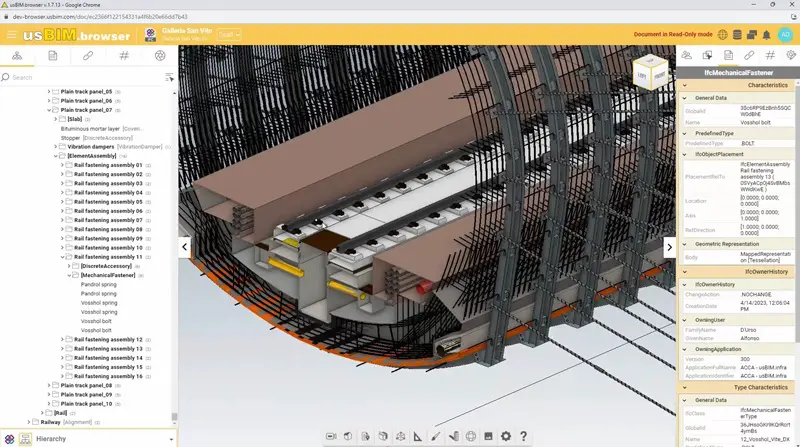
Project quality control | Interface usBIM.checker
Verification and Validation Tools for IFC Model Quality
To ensure that the IFC model is consistent, complete, and interoperable, there are specific verification and validation tools available. Software such as usBIM.checker and usBIM.clash offer functions to:
- check geometric consistency and properties of IFC objects;
- identify clashes between elements (clash detection);
- verify the completeness of Property Sets;
- generate compliance reports for IFC standards and project requirements.
These tools allow for the analysis of the model before using it in multidisciplinary design or facility management phases, ensuring that every IFC object in a BIM project meets quality standards and is fully operational.
Final Checklist – Quality Check of the IFC File
Before sharing or archiving an IFC file within a BIM project, it is essential to perform a thorough quality check. This final phase ensures that every IFC object is consistent, complete, and compliant with interoperability standards, guaranteeing reliable data exchange between the various project disciplines.
A control checklist serves as an essential tool for BIM professionals, useful not only for identifying any errors or omissions but also for certifying the overall quality of the model. This check must include the verification of four key aspects: geometric consistency, correctness of information, integrity of relationships between objects, and compliance with required IFC standards.
The first part of the verification concerns the geometry and positioning of the model. It is necessary to check that the coordinates, scale, and orientation are correct, that the IFC objects are placed in the intended position, and that there are no discrepancies between the exported model and the reference model. A correct definition of global and local coordinate systems ensures perfect integration with other disciplinary models.
Next is the verification of properties and Property Sets (Pset). Each IFC object must contain the mandatory information required by the information specification or company standard. This includes materials, identification codes, classifications, performance parameters, and, when necessary, maintenance-related data. A thorough check of this information ensures the full interoperability of the model with structural, energy, or management analysis software.
Another step involves the analysis of relationships between objects, to verify that all logical connections (for example, between walls and windows, or between beams and columns) are correct. Connection errors can indeed compromise multidisciplinary coordination and cause inconsistencies during integrated modeling.
Finally, the checklist must include the overall validation of the IFC model through dedicated control tools, such as usBIM.checker. These software tools allow for the generation of automatic reports on model quality, highlighting any errors, duplicates, or missing properties. Such reports can be attached to project documentation as a certification of compliance and become an integral part of the openBIM information flow.
FAQ for Inserting and Modifying an IFC Object
What is the IFC format and why is it essential for BIM collaboration?
The IFC format (Industry Foundation Classes) represents the open international standard for data sharing in BIM projects. It was developed by buildingSMART International to ensure interoperability between the various software used throughout the life cycle of a building. Within a BIM project, each element can be represented by an IFC object that contains geometry and technical, performance, and functional information. The main advantage is the ability for architects, structural engineers, MEP engineers, and facility managers to collaborate without the constraints of proprietary software, maintaining data consistency and integrity.
What are the differences between IFC2x3, IFC4, and IFC4.3?
IFC versions have evolved to improve interoperability and information quality. IFC2x3, published in the early 2000s, was the first widely adopted standard but had limitations in managing complex geometries and defining data. IFC4 (2013) introduced greater semantic quality, new Property Sets, support for advanced geometries, and a more precise georeferencing system through IfcMapConversion. IFC4.3 (2021) extended the standard to infrastructures such as roads, bridges, and railways, introducing entities like IfcBridge and IfcRoad and integrating geolocation through IfcCoordinateReferenceSystem, allowing full compatibility with GIS systems and real coordinates.
How does the IFC format improve data exchange between architects, structural engineers, and MEP engineers?
The IFC format serves as a common language among the disciplines of the BIM project. Each element is described as an IFC object with shared classifications and properties (IfcWall, IfcDoor, IfcSlab, etc.), allowing software from different professionals to correctly read the data without loss of information. This facilitates clash detection, structural analyses, and energy simulations within a single coordinated model. The use of the IFC format enhances multidisciplinary communication and the overall quality of the project, reducing errors and review times.
What information does an IFC file contain?
An IFC file contains three main components: entities, properties, and relationships. Entities represent the types of objects present in the model (walls, slabs, windows, systems). Properties contain technical and performance information, such as materials, thermal transmittance, costs, or maintenance codes. Relationships define the links between objects, such as the connection between a window and a wall. This structure allows for intelligent model management and accurate analysis of interdependencies between elements.
How to correctly import an IFC object into a BIM project?
Importing an IFC object into a BIM project is not a simple upload; it requires attention to geometry, properties, and relationships. For example, in Edificius, you select ‘IFC Object’ from the ‘Other’ menu, click on a point on the screen, choose the IFC file to import, and position the object in the scene. You can adjust the position and anchor point to ensure correct alignment with the architectural or structural model.
How to update an already imported IFC object and manage its changes?
To modify an IFC object, select the element and use the side editor to update data and parameters. You can add descriptions, modify dimensions and deltas, assign colors to entities, and choose their visibility. To check the editing, use the ‘Visibility’ function in the toolbar and ‘Hide All’ to view the isolated object and check for any representation errors.
How to resolve the most common issues with IFC files?
The most common issues with IFC files involve errors in scale, coordinates, orientation, or proxy objects. It is important to verify the information in IfcSite, IfcMapConversion, and IfcCoordinateReferenceSystem to realign the model. Unrecognized ‘proxy’ objects can be analyzed and replaced with native software elements while maintaining the main properties. Finally, it should be checked that each IFC entity contains all the required properties through validation tools or IFC checkers.
How to check that IFC entities contain all the required properties?
To ensure that IFC objects contain all necessary information, you can use verification software like usBIM.checker. These tools allow you to view the associated Property Sets (Pset) and check for any omissions. In case of incomplete data, you can manually add properties or import standardized templates, ensuring that the objects are fully informative and usable for project analysis and management.
What tools to use for verifying and validating the quality of an IFC model?
For the verification and validation of IFC models, tools such as usBIM.checker and usBIM.clash are used. These software tools allow you to check geometric consistency, object properties, clashes between elements, and completeness of Property Sets. Additionally, they generate automatic compliance reports that certify the quality of the model, ensuring that every IFC object is consistent and compliant with openBIM standards.
How to verify the final quality of an IFC file?
Before sharing or archiving an IFC file, it is essential to perform a quality check. The final checklist should check geometry and positioning, completeness of properties, correctness of relationships between objects, and compliance with IFC standards. Tools like usBIM.checker allow you to validate the model and generate quality reports. This process ensures that every IFC object is consistent, complete, and ready for exchange between the various BIM disciplines.


