
Sustainable Materials in Construction: The Most Eco-Friendly Options
Green building requires the use of sustainable materials. How to choose them based on energy performance, recyclability, and durability.
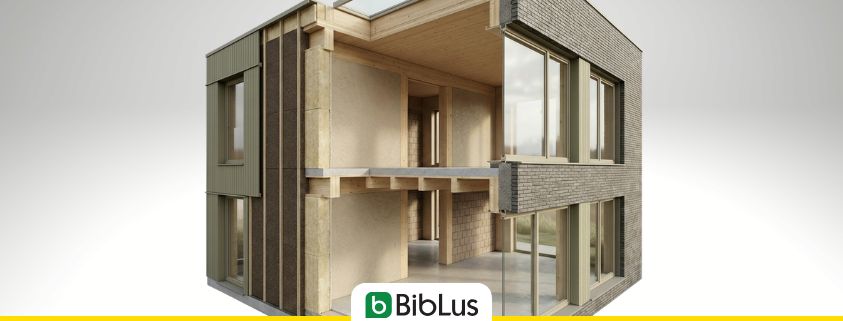
Sustainable materials in construction are building products that are carefully designed and selected to minimize environmental impact throughout their entire life cycle—from raw material extraction and manufacturing to use, maintenance, and end-of-life disposal. In addition to reducing ecological footprint, they enhance energy efficiency, indoor environmental quality, and the long-term durability of buildings.
Their importance becomes clear when examining the scale of the sector’s impact. In Europe, buildings account for approximately 40% of final energy consumption: around 25% is attributable to residential buildings and 15% to the tertiary sector. This share exceeds that of industry (28%) and even transportation (32%).
Moreover, the construction sector is responsible for roughly 30% of total greenhouse gas emissions, highlighting its central role in climate change mitigation strategies.
Land consumption represents another critical issue. Artificial surfaces currently cover about 4% of Europe’s total land area. However, between 2000 and 2006, approximately 600,000 hectares of agricultural land were lost, corresponding to a 3.4% increase in sealed or cemented areas.
These figures underscore the urgency of adopting sustainable materials and practices to reduce environmental pressures while supporting long-term economic and social resilience.
The choice of materials, therefore, is not merely a technical detail but a strategic design lever. Green building and sustainable construction focus on the conscious selection of building materials, assessing their performance, environmental impacts, and contributions to living comfort.
Let’s discover what is meant by sustainable materials and why it is essential to integrate them into contemporary construction processes.
Contents
- Sustainable materials in construction: definition and key characteristics
- Evaluation of sustainable construction materials: what matters most
- Innovative Sustainable Building Materials Shaping the Future of Sustainable Construction
- Practical List of Sustainable Building Materials
- Sustainable Wood Construction Materials
- Ecosustainable Construction Materials: Insulating Materials
- Choice of sustainable materials for building facades based on environmental and aesthetic impact
- Examples of sustainable building materials inspired by real projects
- Eco-friendly building materials: benefits for energy and indoor environments
- FAQ – Eco-sustainable materials in construction
Sustainable materials in construction: definition and key characteristics
Sustainable materials are products and construction systems designed to measurably reduce the environmental impact of the building throughout its entire lifecycle — from raw material extraction to production, from use to disposal or recycling — while ensuring technical performance, durability, and indoor environmental quality.
They are not simply “natural” materials or those of biological origin. A material can be defined as sustainable when it simultaneously meets environmental, energy, and health criteria.
In design terms, talking about sustainable materials means adopting an integrated approach: the choice of each product must be consistent with the construction system, with the energy strategies of the building, and with the environmental goals of the project, avoiding “green” solutions that appear sustainable but are not supported by performance data and technical documentation.
Evaluation of sustainable construction materials: what matters most
The choice of materials for the construction world represents the heart of the implementation phase of a project. It is essential to comply with sustainability criteria. There is a return to past types of materials used for construction, but with two advantages: the development of technology and modernity. Using natural materials means making a responsible choice both for human wellbeing and for that of the environment.
Sustainable architecture is increasingly moving towards those construction systems to be paired with natural materials (the systems of green building). Wood, for example, is a material that has seen exponential development even in locations with more moderate climates. But how can we assess the impact of materials on the environment? Certainly by analyzing them over their entire lifecycle, from extraction to recycling. Among the aspects to consider, we must mention:
- the energy savings that must dominate the production process, in order to minimize CO2 emissions into the air;
- the toxicity of the material during the operational phase;
- the durability and degree of recyclability;
- the pollution caused by the transportation of the material.
For the evaluation of energy performance of buildings for any use, it is essential to use a dynamic energy analysis and simulation software that allows considering sustainable materials in the building model and in the plant part of high-efficiency generators and renewable energy systems.
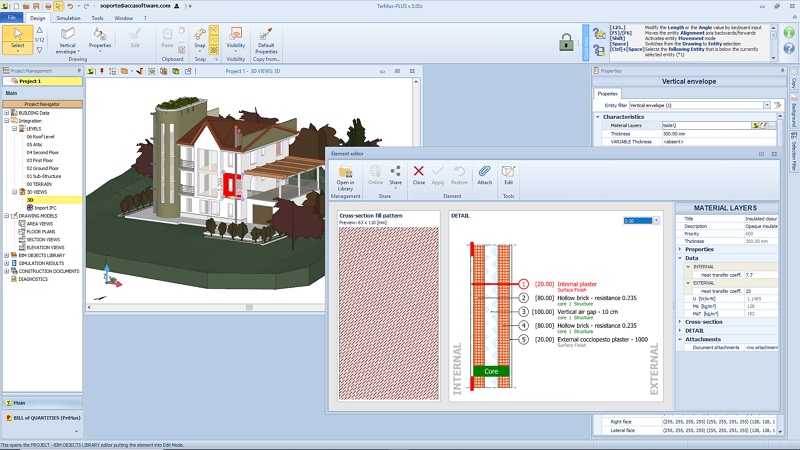
Evaluation of energy performance of buildings with TerMus PLUS
Innovative Sustainable Building Materials Shaping the Future of Sustainable Construction
Building materials account for 50% of the matter extracted from the Earth’s crust for the activities we engage in every day. Global primary energy consumption and greenhouse gas emissions amount to 40%. This is why it is crucial to carefully select the materials used for environmental sustainability. As mentioned before, one must take into account the life cycle of the material and conduct a thorough assessment to consider the environmental, economic, and social impacts of a material.
To evaluate the building process of a structure (both from an energy perspective and regarding the impact of construction on the environment and human health throughout the life cycle of the building), environmental sustainability certification is used.
A material is sustainable when it meets at least the following characteristics:
- lower energy consumption compared to traditional buildings throughout its life cycle;
- lower water consumption compared to traditional buildings;
- less environmental impact over the entire life cycle;
- better quality and indoor comfort;
- greater durability compared to a traditional building;
- absence of toxic substances;
- recyclability.
Practical List of Sustainable Building Materials
But what are the most commonly used eco-sustainable building materials in practical design? In today’s construction landscape, sustainability is expressed through various families of materials employed for structures, masonry, cladding, and dry or massive construction systems.
The following paragraphs analyze the main types, with a technical approach aimed at highlighting environmental advantages, performance, and areas of application, thus providing a useful reference framework for designers and companies.
Brick
In Ancient Rome, the term “brick” referred to the brick used in opus latericium: the technique of building wall facings. Over the years, the term has acquired a broader meaning that encompasses a wide range of products such as solid and hollow bricks, pignatta, tavella, volterrana, coppo, marsigliese tile, etc., used in the construction of vertical (load-bearing walls, infill walls, etc.) and horizontal structures (floors, roofs, etc.).
Bricks are the result of a mixture of clay, sand, and water, which, after mixing, is shaped by extrusion or molding. The subsequent drying and firing in tunnel kilns at a temperature of 1200° result in the finished product. To enhance the insulating properties of the material, various components such as polystyrene beads, sawdust, paper processing residues, or other waste materials can be added to the raw mix. These, after firing, are eliminated, creating small air pores. This reduces the density of the brick and increases its thermal-acoustic properties.
These are products made from natural raw materials, whose production process does not generate waste but allows for the recovery of scraps from other processes. It is important to note, however, that the firing process requires a significant amount of thermal energy, usually produced using fossil fuels, which has a significant environmental impact.
Bricks also offer the possibility of being recycled after use: they can be crushed and used as a base for road construction. During the production process, the scraps from one cycle are reused in the next cycle, contributing to sustainable resource management.
Concrete Blocks with Expanded Clay
Concrete blocks with expanded clay are obtained by mixing expanded clay granules with the traditional mix used for producing blocks intended for load-bearing walls, infill, partition walls, and pavements. Expanded clay is obtained through the grinding and firing of raw clay. During the heating process, the granules, subjected to increasing temperatures, expand due to the development of carbon dioxide and water. Subsequently, passing through a fluid bed of air currents induces the cooling of the granules and hardening of their outer layer, while the inner core remains porous. This characteristic gives the material a high lightness while simultaneously providing good mechanical strength.
Loose expanded clay granules have good thermal inertia and compressive strength. Being mineral-based, they boast fire resistance, refractoriness, chemical inertia, temporal stability, non-decayability, and moisture resistance. The presence of these granules in concrete blocks provides significant insulating properties both thermally and acoustically, in addition to considerable lightness that facilitates installation, leading to economic benefits. The vapor permeability of such blocks prevents condensation and mold formation within the walls, ensuring the building’s breathability.
The fire-resistant properties combined with the controlled geometry of the expanded clay blocks allow minimizing the use of mortar in the joints and, if necessary, reduce the plaster layer.
Natural Stone
Natural stone was partially replaced in the 20th century by materials such as steel, reinforced concrete, and glass. However, with a focus on building components with a low environmental impact, stone has regained relevance in both renovations and new constructions. From a bioecological perspective, stone is suitable, but it is essential to consider requirements such as bioecological properties (permeability and thermal conductivity), bulk density, degree of compactness and porosity, durability, resistance, and aesthetic appearance.
Stones, classified based on bulk density and processing, include tuff, granite, travertine, marble, diorite, syenite, porphyry, and basalt. The choice of stone should also consider its affinity with mortars to ensure structural coherence. Stone processing can be rough, finished, cut, or in the form of slabs.
Raw Earth
Raw earth is obtained by drying a mixture of clay, plant fibers like hemp and straw, and aggregates of varying grain sizes such as sand and gravel. This natural building material, known since ancient times, is easily workable, has a low environmental impact, and is fully recyclable. Thanks to the flexibility in the composition of the mixture, it can be used for creating load-bearing walls, roofs, pavements, and finishes. The remarkable thermal inertia of raw earth provides effective thermal insulation, suitable even for extreme climates. Additionally, clay acts as a “sponge,” absorbing and releasing moisture in a controlled manner, maintaining a comfortable relative humidity level in indoor spaces.
There are three main techniques for working with raw earth, depending on the proportions in the mixture. The rammed earth technique, used with a low percentage of clay, involves placing the earth into molds of the desired size, compacting and ramming each successive layer. With a high percentage of clay and sand, the technique of raw brick is adopted, placing the earth and straw into inverted wooden molds for drying, preventing excessive shrinkage by drying under heaps of sand. Finally, with a high presence of silt, the torchis technique is employed, spreading the mixture onto wooden frameworks anchored to the building’s structure.
Thanks to construction design software, you can carry out your architectural design in 2D/3D for new constructions and renovations by choosing to use eco-sustainable materials.

Designing eco-sustainable buildings with Edificius
Sustainable Wood Construction Materials
In the contemporary construction landscape, wood stands out as an ecological and responsible option.
Unlike energy-intensive construction materials like steel and concrete, wood is a renewable resource: certified forests that are sustainably managed are increasingly widespread, ensuring a balance between timber harvesting and forest regeneration.
On one hand, trees absorb carbon dioxide from the atmosphere through photosynthesis, helping to mitigate climate change; on the other hand, processing wood requires less energy compared to the energy needed to create works with other construction materials.
Moreover, processing waste can be used for energy production or for creating wood-based panels, optimizing resource use.
For more information on types of construction wood and its properties, we recommend reading the article “Wood as a building material.”
Ecosustainable Construction Materials: Insulating Materials
An important feature in the perspective of eco-sustainability is certainly the insulating capacity of a material. Thermal insulation, often linked to acoustic insulation, is a fundamental aspect of building design, as it impacts energy consumption and heat loss through the external envelope. Using materials with high thermal insulation performance helps reduce energy needs of buildings, lowering CO2 emissions and reducing operating costs.
Despite the insulating effectiveness of “artificial” materials of petrochemical origin (like expanded polystyrene or extruded polystyrene, polyurethane, etc.), their production poses risks of environmental pollution, potential toxic emissions in case of fire, and recycling challenges. Therefore, the choice of insulators should favor plant or animal-based materials, such as wood fiber, cork, cellulose, sheep wool, cotton, or linen fibers. This selection aims to ensure high insulating performance while minimizing negative environmental impacts.
Wood Fiber
Wood fiber boards are widely used as natural insulating components. The production process involves grinding spruce or pine wood, followed by drying at high temperatures (350°) and pressing. The addition of alum promotes the release of the wood’s natural resins, giving the panel a marked water-repellent quality, further enhanced by treatments with wax or latex. This method utilizes natural raw materials such as sawmill residues and weak woods, making the panel completely recyclable. The residues from the panels can be reused to produce other insulators or composted.
Wood fiber panels boast significant thermal insulation properties, with a thermal conductivity coefficient of about 0.04 W/mK, and acoustic properties thanks to the interweaving of fibers that hinder the propagation of sound waves. The open structure of the slabs allows for the passage of water vapor, promoting the breathability of roofs or walls, and contributes to the natural regulation of moisture in environments. Furthermore, the aesthetic quality of the panels enables the creation of pleasant environments, offering sensations of visual and tactile well-being due to the natural origin of the material.
Cork
Cork panels are obtained by compressing chips from the less valuable bark of a specific oak (Quercus Suber L.), known as male cork. These components, also made with natural raw materials, are biodegradable and free of toxic substances. It is important to note that the regeneration cycle of the tree’s bark takes about 9 years. The cellular structure of cork, with about 30-40 million air cavities per cm3, gives the material high elasticity, mechanical resistance, and excellent thermal (with a thermal conductivity coefficient of about 0.038 W/mK) and acoustic insulation properties. Cork is also waterproof, fireproof, and resistant to attacks from insects, rodents, woodworms, and bacteria.
The panels, sold in sizes of 50×100 cm with variable thicknesses from 1 to 6 cm, are used for the thermal and acoustic insulation of vertical structures such as external walls and partitions, as well as horizontal elements like floors, attics, and roofs. Cork is non-decaying, a characteristic that allows it to be placed directly under the tile or roof covering layer without the need for a waterproof membrane.
All these features have led to the rediscovery of cork in the construction field: natural, renewable, and durable. An ecological and efficient solution that benefits both the environment and the occupants of buildings.
Sustainability also characterizes it at the end of its life cycle; it can be easily recycled or disposed of in an eco-friendly manner, avoiding waste accumulation and helping to reduce the environmental impact.
Cellulose Fiber
The cellulose insulation is produced by grinding newspapers, followed by treating the resulting flakes with boric salts for fireproofing and pest control purposes. The production process has a low environmental impact, but the resulting material cannot be disposed of in landfills due to the aforementioned salts, making incineration necessary.
The cellulose fiber, with a thermal conductivity coefficient of about 0.037 W/mK, proves to be a good thermal insulator due to the tiny cavities in the flakes that hinder heat transmission. Characterized by high hygroscopicity, it can absorb about 30% of the humidity present in an environment, releasing it slowly to ensure comfort in living spaces.
Installation occurs by blowing the flakes into cavities or by spraying on wet walls. In addition to the flakes, pressed cellulose panels are commercially available, suitable as coverings for existing walls during renovation work.
Bamboo as a Sustainable Building Material
Bamboo originates from a giant evergreen grass with a life cycle of 80-100 years, flowering only once at the end of that cycle. It can grow and thrive practically anywhere and at any temperature (between -25°C and +45°C), reaching heights of up to 25 meters.
It is the fastest-growing plant in the world; some species are capable of growing up to one meter per day under optimal conditions.
Despite being lightweight and flexible, bamboo is remarkably strong and durable. For this reason, it is often referred to as “vegetable steel.” Its tensile strength can exceed that of steel, and its compressive strength is comparable to concrete. These mechanical properties make it particularly resistant to seismic forces, which explains its long-standing use in earthquake-resistant construction.
All these characteristics make bamboo a highly sustainable and efficient building material, thanks to:
- rapid and renewable growth;
- CO2 absorption;
- strength and flexibility;
- lightness and versatility.
Choice of sustainable materials for building facades based on environmental and aesthetic impact
Sustainable facades are fundamental elements of green architecture: they improve the energy efficiency of buildings, reduce environmental impact, and enhance aesthetics.
The choice of the cladding or finishing material for facades is therefore of great importance: among the most appreciated solutions stands out natural plaster, natural paints for finishes, or aluminum and other natural cladding materials, for both ventilated and non-ventilated facade finishing materials.
Natural plaster
Plaster is applied to walls to provide uniformity to the surface and serves as a protection against climatic events and/or mechanical factors. Breathability is surely the most important characteristic to consider: hydraulic lime-based plasters with dehumidifying and breathable properties are generally preferred. It is important to remember that lime is the best natural insulator, a material already used in ancient times. Moreover, lime plaster is highly breathable: it facilitates an exchange with the outside and prevents the formation of condensation on walls.
Another case of natural plaster is raw clay, a fully natural material, easy to extract and 100% recyclable. It is increasingly spreading due to its aesthetic and functional properties, ranging from porous to smooth with a variety of colors. Clay plaster can be applied to various substrates, providing thermal and acoustic insulation and is biocompatible, hypoallergenic, and hygroscopic. It plays a significant role in Passivhaus, helping to maintain stable temperature and humidity, thus improving comfort in living spaces.
Natural paints
Natural paints, also known as natural varnishes, are made exclusively from organic ingredients, mainly based on resin extracted from conifers such as larches and pines. These materials offer numerous advantages, including high breathability, hypoallergenic and anti-mold properties, absence of toxic substances, durability over time, they do not attract dust, have a pleasant scent derived from natural pigments, can be applied even with closed windows, provide high-quality aesthetics, are easy to work with, and require simple maintenance. These natural paints are ideal for bio-building projects, both for interiors and exteriors, and can be used in new constructions or in the renovation of existing buildings, including those located in historical centers. Their healthy, safe, and high-performance nature contributes to overall well-being and high living comfort.
Aluminum cladding
Aluminum is a lightweight, durable, and highly eco-friendly material. It can largely be produced from recycled sources, with percentages ranging from 20% to 80%, depending on the specifications provided by raw material suppliers. This helps to reduce the environmental impact associated with the extraction and production of new metal, promoting a circular approach that complies with European sustainability regulations.
Additionally, aluminum is completely recyclable at the end of its life, with no loss of quality or performance, and offers excellent durability, especially in environments exposed to aggressive weather conditions. Thanks to these characteristics, it stands out as an ideal material for modern architectural facades, both from a technical and environmental point of view.
Porcelain stoneware cladding
Recycled porcelain stoneware is created from the introduction of industrial waste and processing residues into the ceramic mixture. This process helps reduce the extraction of new raw materials and values materials otherwise destined for landfills.
Recycled porcelain stoneware is sustainable due to low environmental impact production, thanks to the recovery of materials and optimization of energy processes, reduction of CO₂ emissions, both in the extraction phase and in the firing phase, and complete recyclability at the end of its life, as the tiles can be crushed and reused as secondary raw materials.
Technical comparison of sustainable materials for building applications
The following table summarizes the main environmental and performance characteristics of the analyzed materials, relating use category, environmental advantages, technical performance, and possible critical issues, in order to support a conscious and comparable design choice.
| Material | Category | Main environmental advantage | Key technical performance | Critical issues / limitations |
| Brick | Vertical/horizontal walls and structures | Made from natural raw materials; possibility of recycling and reusing production waste | Good thermo-acoustic properties due to porosity; reduced density | High-temperature firing process with high thermal energy consumption from fossil fuels |
| Concrete blocks with expanded clay | Load-bearing walls, infill, partitions | Durability and stability over time; non-combustible and moisture-resistant mineral material | High lightness, good mechanical resistance, thermal inertia and thermo-acoustic insulating properties | Presence of a firing phase of clay to obtain expanded granules |
| Natural stone | Walls and cladding | Environmentally suitable material; low impact if correctly selected | High durability and resistance; variety of finishes | High volumetric weight; need to evaluate permeability, conductivity and compatibility with mortars |
| Raw earth | Walls, roofs, flooring, finishes | Low environmental impact and fully recyclable | High thermal inertia; natural humidity regulation | Need for specific construction techniques based on the composition of the mix |
| Sustainable wood | Building structures and components | Renewable resource; CO₂ absorption; lower processing energy compared to steel and cement | Good strength-to-weight ratio; construction versatility | Need for sustainable forest management to ensure balance between harvesting and regeneration |
| Wood fiber | Natural insulator | Use of sawmill residues; fully recyclable material | Thermal conductivity ≈ 0.04 W/mK; breathability and humidity regulation | Production process with high-temperature drying (350°) |
| Cork | Natural insulator | Biodegradable, free from toxic substances; obtained from renewable bark | Thermal conductivity ≈ 0.038 W/mK; waterproof, fireproof, resistant to insects and bacteria | Long regeneration cycle of the bark (about 9 years) |
| Cellulose fiber | Recycled insulator | Produced from recycled paper; low environmental impact process | Thermal conductivity ≈ 0.037 W/mK; high hygroscopicity (absorbs up to 30% humidity) | Not disposable in landfills due to the presence of boric salts; requires incineration |
| Natural plaster | Finishing for facades and interiors | Natural and recyclable material (100% recyclable clay) | High breathability; temperature and humidity regulation | No critical issues explicitly indicated in the text |
| Natural paints | Surface finishing | Organic ingredients, absence of toxic substances | High breathability; anti-mold and anti-allergic properties | Heavy weight and need to verify physical-mechanical properties and compatibility with mortars |
| Aluminum cladding | Facades | High percentage of recycled material; fully recyclable at end of life | Lightness, strength and durability in aggressive environments | Primary production has environmental impact related to extraction (reduced only if recycled) |
| Recycled porcelain stoneware cladding | Cladding for facades | Recovery of industrial waste; reduction of new raw material extraction | High resistance and recyclability at end of life | Energy-intensive firing process (reduced thanks to energy optimization) |
Examples of sustainable building materials inspired by real projects
There are many examples of eco-sustainable buildings around the world that can be referenced to identify sustainable materials:
- the Nk’Mip Desert Cultural Centre in Canada, built with rammed earth. It is famous for having the largest rammed earth wall in North America at the time of construction (80 m long and 0.60 m thick);
- the Vertical Forest, in Milan, Italy, characterized by plants, trees, and shrubs structurally integrated into the facade to absorb CO2 and improve the microclimate;
- The Mjøstårnet, in Norway, which is the tallest wooden skyscraper in the world. It is a symbol of bio-building, as it pushes wood beyond its structural limits, being capable of storing about 1700 tons of CO2.
If you want to learn about other famous examples, read the in-depth article on eco-sustainable buildings.
Eco-friendly building materials: benefits for energy and indoor environments
The increasing adoption of eco-sustainable materials in construction represents a fundamental step forward towards building living environments that combine environmental sustainability, energy efficiency, and occupant well-being. The careful selection of materials such as certified wood, clay, wood fiber, and other eco-compatible solutions not only reduces the environmental impact of construction but also helps create healthier spaces suitable for people’s well-being.
These materials not only meet strict environmental standards but also offer beneficial intrinsic properties, such as excellent thermal regulation, the ability to absorb excess moisture, and resistance to pathogens like mold and bacteria. Beyond environmental considerations, the use of these solutions leads to substantial energy savings in the long term, thus contributing to the economic sustainability of buildings.
In a context where environmental awareness is increasingly central, the construction industry is embracing these practices to meet current and future needs.
FAQ – Eco-sustainable materials in construction
What is meant by eco-sustainable materials in construction?
Eco-sustainable materials in construction are building materials designed and selected to reduce environmental impact throughout their entire life cycle, while simultaneously improving energy efficiency, healthiness, and durability of buildings. Their assessment takes into account the origin of raw materials, the production process, performance during use, and recycling possibilities at the end of life.
What criteria determine the sustainability of a building material?
The sustainability of a material does not solely depend on whether it is natural. It is necessary to evaluate the energy consumption during the production phase, the presence of potentially harmful substances, durability, recyclability, and thermal-acoustic performance that contribute to reducing the energy consumption of the building.
What are the most commonly used eco-sustainable materials in construction?
Among the most common materials are bricks, concrete blocks with expanded clay, natural stone, rammed earth, sustainable wood, and natural insulators such as wood fiber, cork, and cellulose. Each material has specific environmental and performance characteristics making it suitable for certain applications.
Why are natural insulators important in sustainable construction?
Thermal insulation directly affects energy consumption and heat losses through the building envelope. Materials such as wood fiber, cork, and cellulose ensure high insulating performance, helping to reduce CO₂ emissions and operating costs, in addition to promoting the natural regulation of indoor humidity.
Is wood really a sustainable material for construction?
Wood is considered sustainable when it comes from responsibly managed forests. It is a renewable resource, absorbs carbon dioxide during growth, and requires less processing energy compared to energy-intensive materials such as steel and cement.
Is rammed earth suitable for contemporary buildings?
Yes. Rammed earth, used since ancient times, is a low environmental impact and fully recyclable material. It offers high thermal inertia and contributes to the regulation of indoor humidity. It can be used in load-bearing walls, roofs, flooring, and finishes, employing various construction techniques.
Do eco-sustainable materials actually allow for real energy savings?
Yes. The use of materials with good thermal-insulating and hygrometric performance helps to reduce the energy demand of buildings, lowering CO₂ emissions and improving living comfort in the long term.
Why is the choice of materials strategic for bio-construction?
The construction sector significantly affects energy consumption, emissions, and land use. For this reason, the selection of materials represents a key design lever for reducing the overall environmental impact of buildings and improving the quality of built spaces.


