
IFC Longevity and Future-Proofing: The Pillars for Sustainable Construction
Here's how IFC is revolutionizing the AEC sector, ensuring interoperability and data longevity. Discover the challenges and solutions for a more efficient construction future

The AEC industry isn’t static; it’s continuously evolving. As new technologies, materials, and construction methods emerge regularly, the IFC plays a fundamental role in future-proofing the industry by embracing these changes. In fact, the IFC flexibility allows it to adapt to evolving needs and requirements, ensuring it remains a relevant and indispensable tool for years to come.
Contents
- What is IFC and why does it ensure the longevity of BIM data
- Future-proofing in construction: operational meaning beyond BIM
- Practical comparison: openBIM (IFC) vs proprietary workflows
- Applicable regulations and standards
- Benefits of IFC: the value in interoperability and communication
- The future of IFC in BIM and the construction industry
- FAQ on IFC Longevity and Future-Proofing
What is IFC and why does it ensure the longevity of BIM data
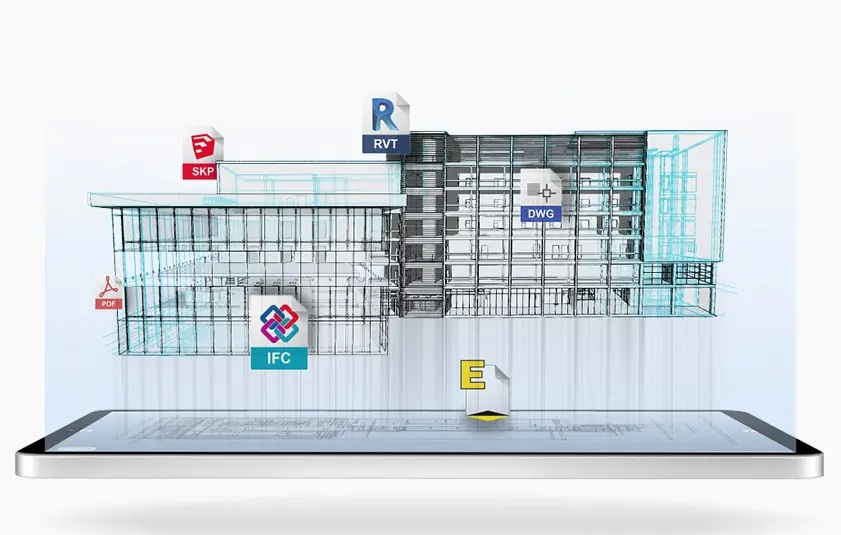
The IFC (Industry Foundation Classes) is an open and international standard developed by buildingSMART International to ensure interoperability between different BIM software. It is a neutral data format, not tied to a single vendor, designed to comprehensively and consistently describe the elements, relationships, and information of a digital building model.
Thanks to its open structure, IFC allows for the sharing, reading, and management of BIM data over time, regardless of the software tools used, thus ensuring the longevity of IFC and the usability of the building’s information assets throughout its lifecycle (from design to maintenance, up to decommissioning).
IFC and interoperability: how to avoid software lock-in
One of the factors that most contributes to IFC longevity is its ability to guarantee interoperability and independence from proprietary software. In an increasingly fragmented BIM ecosystem, where architects, engineers, builders, and managers use different tools, the need for a neutral standard is crucial.
IFC represents the answer to this need, allowing the exchange of consistent and complete data between different platforms without losing geometric, technical, or performance information.
Thanks to IFC, a BIM model created in one software can be exported and reused in another, keeping intact the data related to materials, quantities, physical properties, classifications, and relationships between objects. This means avoiding technological lock-in, that is, forced dependence on a single software solution, which over time can become obsolete or economically unsustainable.
IFC interoperability thus guarantees transparency and operational freedom, allowing professionals to update tools, collaborate with partners using different platforms, and maintain continuity in the project’s information flow.
Moreover, it promotes the creation of open digital ecosystems, in which all actors in the construction process can participate collaboratively, exchanging reliable information throughout the entire Building Lifecycle Management (BLM), from the concept phase to the management of the work.
In the context of the digitalization of the construction sector, this interoperability is not just a technical advantage, but an essential condition for the digital sustainability of BIM projects. The adoption of open standards like IFC thus represents a strategic investment for those who wish to ensure the durability, accessibility, and value of BIM data in the long term.
Schema, files, and APIs: how IFC evolves for future-proofing
Another determining element of IFC longevity is its ability to evolve over time, adapting to the new needs of the sector and technological transformations.
The strength of IFC lies in its structure: an extensible and formalized data schema that accurately describes objects, properties, spatial and functional relationships of a digital model.
This architecture allows for the unique representation of building information and maintains compatibility between successive versions, ensuring data readability even after many years.
With the latest versions, buildingSMART has introduced an increasingly refined level of detail, expanding coverage beyond vertical construction to infrastructure, bridges, railways, MEP systems, etc.
Each new release of the schema not only improves the semantic quality of the data but also strengthens the format’s ability to integrate complex processes and support multidisciplinary information flows.
Thanks to this continuous innovation, IFC confirms itself as a “future-proof” format, capable of preserving the validity and readability of data even in rapidly changing technological scenarios.
Its open architecture, along with the support of a large international community of developers, ensures that BIM models archived today can be understood, reused, and integrated even with future technologies, thus ensuring the informational and functional longevity of BIM data over time.
Future-proofing in construction: operational meaning beyond BIM
In the context of the digital transformation of construction, the concept of future-proofing not only concerns the ability of a building to withstand the test of time but also that of the digital data that describes it.
In this sense, the longevity of IFC takes on a strategic role: it ensures that the information produced during the design and construction phases remains readable, accessible, and interoperable throughout the entire lifecycle of the project.
Thus, future-proofing in construction is not limited to the adoption of BIM as a methodology but extends to an operational approach based on digital resilience, adaptability of systems, and information continuity.
Thanks to the use of open standards like IFC, models never become “old project files,” but dynamic knowledge archives, ready to interact with emerging technologies such as IoT platforms, energy monitoring systems, and digital twins.
The result is a digital heritage that retains value over time, reducing update costs, risks of obsolescence, and dependence on specific software.
Resilience, adaptability, circularity: from design to management
Throughout the lifecycle of a building, functional, regulatory, and technological requirements constantly change: IFC allows these changes to be addressed while maintaining the consistency and traceability of BIM data.
Digital resilience translates into the ability to preserve and reuse data over time, even when the original software or platforms are no longer available.
Adaptability, on the other hand, concerns the ability to integrate new levels of information (IoT sensors, energy models, maintenance data) without having to recreate the BIM model from scratch.
Finally, the circularity applied to data and BIM processes promotes a sustainable approach to information management: IFC data, thanks to their open and reusable structure, can be recycled and updated for new uses, such as renovation or controlled decommissioning of the building.
In this way, future-proofing becomes not only a strategy for efficiency but also a tool for digital sustainability, perfectly aligned with the principles of the circular economy applied to the built environment.
Longevi data = long-lived assets: connecting models, O&M, and digital twins
A long-lived data, that is accessible, readable, and updatable over time, becomes a strategic asset on par with the physical structures of the building.
Through IFC, BIM models can be integrated into Operation & Maintenance (O&M) systems, where information about materials, systems, performance, and maintenance is continuously managed and updated.
This direct connection between digital design and operational management creates a bidirectional information flow: from the model to the built reality, and vice versa.
When such models are further connected to IoT sensors and digital twin platforms, IFC data becomes the common language that ensures consistency, traceability, and informational longevity.
In other words, the longevity of IFC is not just about file formats but the entire system of knowledge that accompanies the building throughout its useful life, allowing for smarter intervention planning, extending asset life, and reducing overall environmental impact.
Open and interoperable BIM workflows
In the operational context, an open BIM workflow is based on processes that promote data exchange through standardized formats such as IFC, BCF, and IDS (Information Delivery Specification).
The use of IFC at every stage of the flow allows all parties involved — designers, contractors, project managers, facility managers — to collaborate without platform constraints, sharing consistent and verifiable information.
An open BIM workflow allows:
- to integrate disciplinary models (architectural, structural, MEP) into a single shared environment;
- to maintain the semantic consistency of data across different software;
- to verify the quality and completeness of information through IFC validation tools;
- to ensure digital continuity even after project delivery.
This methodology is the foundation for the future-proofing of projects because it reduces dependence on individual tools and ensures that data remains accessible and reusable even in future technological scenarios.
Practical comparison: openBIM (IFC) vs proprietary workflows
In the current landscape of digital design, BIM workflows are divided into two main categories: openBIM workflows, based on open standards such as IFC, and proprietary workflows, closely tied to a single software or ecosystem. Understanding the differences between these approaches is essential for evaluating the longevity of BIM data and the effectiveness of future-proofing in construction.
OpenBIM and IFC: interoperability and digital continuity
OpenBIM workflows rely on the use of the IFC standard as a neutral format for data exchange between different platforms.
The main practical advantages are:
- total interoperability: architects, engineers, builders, and facility managers can share models without losing information, regardless of the software used;
- data transparency: every element of the model is clearly defined, with properties and relationships readable even after years;
- flexibility and updatability: data can be updated, integrated with IoT sensors, or linked to digital twins, ensuring operational continuity over time;
- operational future-proofing: the adoption of open standards reduces the risk of data obsolescence, allowing models to migrate to new platforms without information loss.
In practice, openBIM with IFC transforms the digital model into a durable asset, capable of supporting decision-making processes, predictive maintenance, and asset management throughout the building’s life.
Proprietary workflows: lock-in risks and limitations
In contrast, proprietary workflows tied to a single software may initially seem faster or more integrated, but they present several critical issues:
- technological lock-in: data become dependent on a single provider, making migration to new platforms difficult;
- reduced interoperability: exchanging information with other professionals or software often requires complex conversions that can lead to information loss;
- data obsolescence: updates or software changes can render the model unusable, compromising information continuity;
- limitations on digital integration: connecting models to O&M management systems, IoT sensors, or digital twins is often more complicated, reducing the ability to implement management strategies based on long-lived data.
These aspects make proprietary workflows less suitable for ensuring the longevity of BIM data, especially in complex projects or those intended for multi-decade lifecycles.
| Characteristic | openBIM (IFC) | Proprietary Workflows |
|---|---|---|
| Interoperability | High, multi-software | Limited, tied to software |
| Data Longevity | Guaranteed, future-proof | Limited, risk of obsolescence |
| Updates and Integrations | Easy, with APIs and digital twins | Complex, often manual |
| Transparency and Traceability | Complete, open standard | Variable, proprietary |
| Multidisciplinary Collaboration | Fluid and open | Tied to software |
The comparison clearly highlights how the adoption of IFC and openBIM workflows represents a strategic investment for the digital sustainability of projects, ensuring that data remains durable assets over time and that the project can evolve without losing informational value.
Applicable regulations and standards
The longevity of IFC does not depend solely on technology and workflows but also on adherence to national and international regulations and standards.
The use of open standards such as IFC, along with legislative guidelines and contractual requirements, is essential to ensure that BIM data remain accessible, interoperable, and readable over time.
Benefits of IFC: the value in interoperability and communication
The main advantage offered by the IFC format, as mentioned, is the ability to enable free collaboration among the various parties involved in the construction process, allowing them to exchange information through a standard format. This leads to reduced times, information integrity, higher quality, fewer errors, and generally a reduction in costs, thanks to consistent data and information during the design, construction, and maintenance phases.
All of this ensures the freedom of software choice in the design work for every stakeholder involved.
Interoperability and application integration are also key factors for the realization of open and interconnected information systems, necessary to achieve the digitalization objectives of the construction sector.
The future of IFC in BIM and the construction industry
The development of the IFC format continues unabated, and work is already underway on the new version 5, designed to integrate new concepts such as smart buildings, smart cities, and digital twins. The primary goal of this development is modernization and standardization, aiming to support new operational paradigms and advancements in the construction sector while maintaining the semantic integrity of its previous iteration. Longevity of IFC data and future proofing.
Today, the structure of IFC focuses on defining a standard for data exchange based on files; new operational methodologies require IFC to adapt to new requirements in order to meet the needs of CDEs, digital twins, IoT, and smart cities. This premise anticipates a significant transformation compared to traditional file-based approaches in modeling.
FAQ on IFC Longevity and Future-Proofing
What is IFC and why does it ensure the longevity of BIM data?
IFC (Industry Foundation Classes) is an open and international standard developed by buildingSMART International to ensure interoperability between different BIM software. It is a neutral data format designed to comprehensively and consistently describe the elements, relationships, and information of a digital building model. Thanks to its open structure, IFC allows for the sharing, reading, and management of BIM data over time, ensuring the usability of the building’s information asset throughout its lifecycle.
How does IFC prevent software lock-in?
One of the main advantages of IFC is its ability to ensure interoperability and independence from proprietary software. It allows for the export and import of BIM models between different platforms without losing geometric, technical, or performance information, avoiding technological lock-in and ensuring transparency, operational freedom, and continuity of information flows throughout the Building Lifecycle Management.
How is IFC evolving for future-proofing?
IFC evolves through an extensible data schema that describes objects, properties, and spatial and functional relationships, maintaining compatibility between successive versions. New releases expand coverage beyond vertical construction to infrastructure, MEP systems, and digital twins. The open architecture, along with APIs and modern formats, ensures that BIM models can be read and reused over time, even with future technologies.
What does future-proofing mean in construction beyond BIM?
Future-proofing in construction is not just about the physical durability of the building, but also that of digital data. Thanks to IFC longevity, the information produced during design and construction remains readable, accessible, and interoperable throughout the lifecycle of the work. This approach is based on digital resilience, adaptability of systems, and information continuity, integrating emerging technologies such as IoT, energy monitoring, and digital twins.
What are the benefits of resilience, adaptability, and circularity in BIM data?
Digital resilience allows for the preservation and reuse of data even when original software or platforms are no longer available. Adaptability enables the integration of new information levels without recreating the model. Circularity applied to IFC data promotes sustainability, allowing for the updating and recycling of information for new uses, such as renovation or controlled decommissioning, making data a true durable digital asset.
How to link BIM models, O&M, and digital twin with IFC?
BIM models based on IFC can be integrated into Operation & Maintenance (O&M) systems, allowing for the continuous management and updating of information on materials, systems, and maintenance. By linking these models to IoT sensors and digital twins, IFC becomes the common language that ensures consistency, traceability, and longevity of data, transforming digital information into strategic assets for building management and planning.
What is the comparison between openBIM (IFC) and proprietary workflows?
OpenBIM workflows based on IFC offer total interoperability, data transparency, flexibility, and operational future-proofing, while proprietary workflows present risks of technological lock-in, limited interoperability, data obsolescence, and difficulties in digital integration. OpenBIM ensures that data remains readable and reusable over time, supporting asset management and predictive maintenance.
What are the benefits of IFC in collaboration and communication among stakeholders?
IFC enables free collaboration among all parties involved in the construction process, allowing for the exchange of information through a standard format. This reduces time and costs, improves the quality and integrity of data, minimizes errors, and guarantees freedom of software choice. Interoperability and application integration thus become key factors in creating open and interconnected information systems, essential for the digitalization of the construction industry.
What is the future of IFC in BIM and the construction industry?
The development of IFC continues with version 5, designed to support smart buildings, smart cities, and digital twins. The goal is to modernize and standardize the format while maintaining semantic integrity and ensuring that data remains readable, reusable, and interoperable in complex scenarios, integrating CDE, IoT, and emerging technologies to ensure informational longevity and future-proofing of BIM models.


